GLP-1 Hydration: Why Drinking Enough Gets Harder

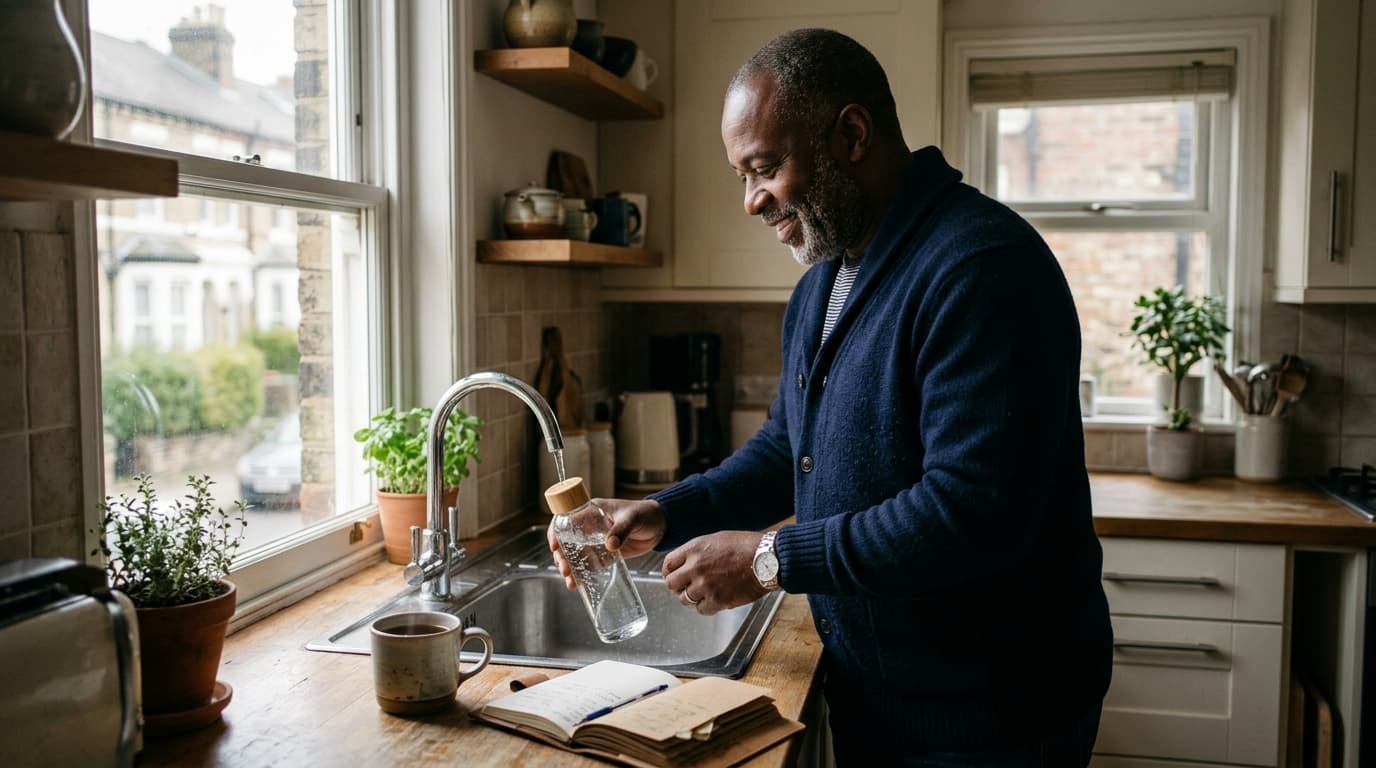
On GLP-1 treatment, fluids can slip two ways: a smaller appetite means less water from food, and nausea, vomiting or diarrhea take fluid out. This piece quotes what the US and EU labels say about dehydration, gives EFSA's general adult reference, and sets out simple if-then routines to keep drinking.
On GLP-1 treatment, fluids can slip from two directions at once. Eating less means less of the water that food quietly supplies, and nausea, vomiting or diarrhea can take fluid out. The labels name dehydration as a risk that runs through those stomach side effects. The practical answer is a routine that doesn't depend on feeling thirsty.
This is a behavioral article about habits on GLP-1 treatment. It is not medical advice. For anything about your dose, side effects or how much you should drink, ask your prescriber or pharmacist.
By Ada Serra, behavior writer and host of the Gila Podcast. Edited by Sezen Soykut.
Key takeaways
- The labels don't say these medicines dry you out directly. They say nausea, vomiting and diarrhea can lead to dehydration, which in rare cases can affect the kidneys.
- Those side effects are common, and the US Wegovy label flags starting treatment and dose increases as the time to watch.
- Food counts toward your fluids. When your plate gets smaller, that water shrinks with it.
- Don't wait until you feel like drinking. Tie a glass of water to things you already do each day.
Two ways fluids slip at once
The first is quiet. The European Food Safety Authority counts "food moisture" as part of your total water intake, alongside drinks [6]. The CDC agrees: foods, "especially those with high water content such as many fruits and vegetables, can also add to fluid intake" [7].
So when your appetite drops (the Mounjaro label lists "decreased appetite" among its most common adverse reactions [3]), the soup, fruit and yogurt you used to eat stop topping up your fluids. You drink the same and still take in less.
The second is louder: stomach side effects take fluid out.
How common the stomach side effects are
In the US Wegovy label's weight-loss trials, nausea was reported by 44% of people on the 2.4 mg dose versus 16% on placebo, diarrhea by 30% versus 16%, and vomiting by 24% versus 6% [1]. The Mounjaro and Zepbound labels list nausea, diarrhea and vomiting among their most common adverse reactions too [3][4].
These are trial percentages, not a forecast. But a week of nausea or loose stools is not unusual, and your fluids deserve more attention that week.
What the labels actually say about dehydration
The US Wegovy label notes reports of acute kidney injury and says "the majority of the reported events occurred in patients who experienced gastrointestinal reactions leading to dehydration such as nausea, vomiting, or diarrhea." It asks prescribers to monitor kidney function in people with those reactions, "especially during dosage initiation and escalation" [1]. The Ozempic label adds that some of these events happened in people "without known underlying renal disease" [2].
The European product information puts the chain in one line: "nausea, vomiting, and diarrhoea may cause dehydration, which in rare cases can lead to a deterioration of renal function." It says patients "should be advised of the potential risk of dehydration in relation to gastrointestinal side effects and take precautions to avoid fluid depletion" [5].
Three things stand out. The route runs through stomach side effects, not the medicine on its own. Kidney problems are described as rare. And starting out and stepping up a dose are the weeks the label singles out. Our guide to dose escalation schedules explains how those steps work.
How much is "enough"?
No label or guideline we checked gives a separate water target for people on GLP-1 medicines. The general adult reference comes from EFSA: an adequate intake of 2.0 liters a day for women and 2.5 liters for men [6]. That's total water, food included, and it applies only to moderate temperatures and activity [6]; hot days and hard workouts fall outside it.
If you want a personal starting number, Gila's water intake calculator works from your weight and age, then adds amounts for activity, climate and any stomach symptoms you report. Choosing your medication doesn't change the number. It adds some explanatory context and a caution banner. Treat the result as a practical estimate, not a medical prescription.
When diarrhea is part of the picture, the NIH's digestive-health institute says "you need to replace lost fluids and electrolytes," and suggests water plus liquids with electrolytes, "such as broths and sports drinks" [8]. Water supports eating. It doesn't replace it.
Why "just drink more" doesn't work
BJ Fogg's behavior model puts it in one sentence: "Behavior happens when Motivation, Ability, and a Prompt come together at the same time" [9].
With a smaller appetite, fewer meals and snacks bring a drink along with them, and waiting until you feel like drinking leaves it to motivation alone. What works better is the other two: take effort out of drinking (ability) and give it a trigger (prompt).
Psychologist Peter Gollwitzer's research on implementation intentions gives the format. His if-then plans take the form "Whenever situation x arises, I will initiate the goal-directed response y," handing control to "anticipated situational cues" [10]. You decide the moment in advance, so you don't have to remember it later.
A small routine to keep drinking
Pick two or three of these, not all of them.
- When I put the kettle on in the morning, I'll drink a glass of water while it boils.
- When I sit down to a meal, however small, I'll pour a glass first.
- When I take my dose, I'll fill and finish one glass of water. It's already a fixed moment, which makes it a reliable prompt.
- When I get back from the school run or my commute, I'll refill the bottle before I take off my coat.
Cut the effort, too. Keep a bottle in sight, on the desk and not in the bag. Marked lines turn "did I drink enough?" into a glance. Logging water in Gila, or anywhere, gives you something concrete to show your care team.
For the bigger picture, see habits that outlast the prescription and GLP-1s as tools, not solutions.
When to call your care team
The CDC notes that dehydration "may cause unclear thinking, mood change, overheating, constipation, and kidney stones" [7]. If vomiting or diarrhea keeps going, mention it to your prescriber or pharmacist rather than waiting for your next appointment. This is exactly what the labels ask them to watch.
Keep reading
- Eating Out on GLP-1: Restaurants and Social Meals
- Traveling with GLP-1: Pens, Flights and Your Routine
FAQ
Do GLP-1 medicines cause dehydration? The labels link dehydration to stomach side effects (nausea, vomiting and diarrhea), not to the medicine on its own [1][5]. Eating less can also lower the water you get from food [6].
How much water should I drink on GLP-1 treatment? No official GLP-1-specific target exists in the sources we checked. EFSA's general adult reference is 2.0 L a day for women and 2.5 L for men, food included [6]. Ask your prescriber about your own situation.
What if I feel too nauseous to drink? Ask your prescriber or pharmacist, especially if it lasts. The European label says patients should "take precautions to avoid fluid depletion" [5]; your care team can tell you what that means for you.
The Gila pilot is free and currently on iPhone: sign up here. Our weekly newsletter is here.
Sources
- US FDA, WEGOVY (semaglutide) injection, prescribing information, §5.5 and §6.1. https://www.accessdata.fda.gov/drugsatfda_docs/label/2025/215256s026lbl.pdf
- US FDA, OZEMPIC (semaglutide) injection, prescribing information, §5.6. https://www.accessdata.fda.gov/drugsatfda_docs/label/2023/209637s020s021lbl.pdf
- US FDA, MOUNJARO (tirzepatide) injection, prescribing information, via DailyMed (NIH). https://dailymed.nlm.nih.gov/dailymed/drugInfo.cfm?setid=d2d7da5d-ad07-4228-955f-cf7e355c8cc0
- US FDA, ZEPBOUND (tirzepatide) injection, prescribing information, via DailyMed (NIH). https://dailymed.nlm.nih.gov/dailymed/drugInfo.cfm?setid=487cd7e7-434c-4925-99fa-aa80b1cc776b
- European Medicines Agency, Wegovy (semaglutide), EPAR product information, §4.4. https://www.ema.europa.eu/en/documents/product-information/wegovy-epar-product-information_en.pdf
- EFSA Panel on Dietetic Products, Nutrition, and Allergies. "Scientific Opinion on Dietary Reference Values for water." EFSA Journal 2010;8(3):1459. https://doi.org/10.2903/j.efsa.2010.1459
- CDC, "About Water and Healthier Drinks." https://www.cdc.gov/healthy-weight-growth/water-healthy-drinks/index.html
- NIDDK (NIH), "Treatment of Diarrhea." https://www.niddk.nih.gov/health-information/digestive-diseases/diarrhea/treatment
- BJ Fogg, Fogg Behavior Model. https://www.behaviormodel.org/
- Gollwitzer PM. "Implementation intentions: Strong effects of simple plans." American Psychologist 1999;54(7):493–503. https://www.prospectivepsych.org/sites/default/files/pictures/Gollwitzer_Implementation-intentions-1999.pdf
Related Articles
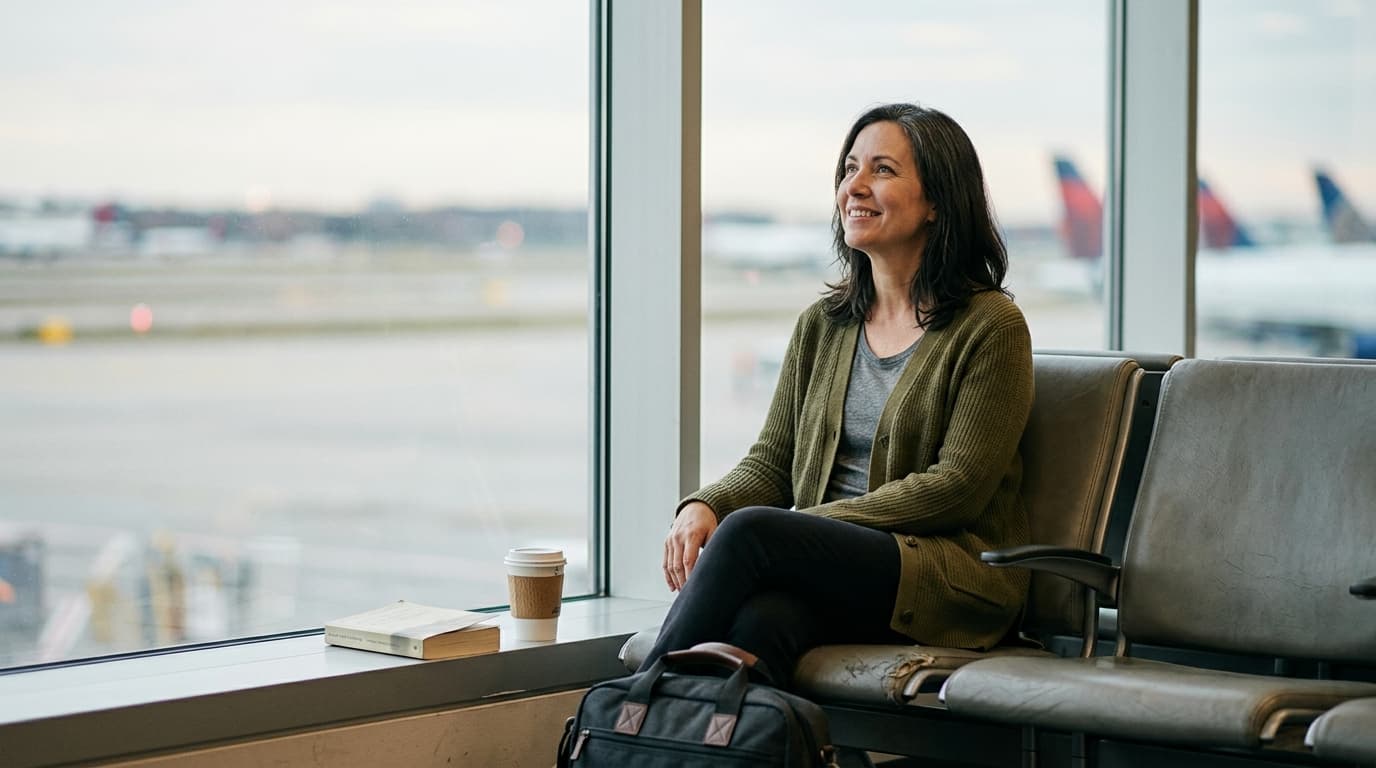
Traveling with GLP-1: Pens, Flights and Your Routine
A trip changes where your GLP-1 pen lives and what your day looks like. This piece sets out what each US label says about keeping pens cold, how TSA, UK and CDC guidance handle medication in transit, why travel loosens routines, and how to rebuild yours in the first three days home.
Read more →
Eating Out on GLP-1: Restaurants and Social Meals
A smaller appetite meets big restaurant portions and a table of people who love you. This piece covers why eating with friends pulls harder, how to decide before you go, how to order down or share, and short lines for when someone offers just one more.
Read more →
Shotsy vs GlucoPal: How These Two GLP-1 Trackers Compare in 2026
Shotsy and GlucoPal are both free-to-download GLP-1 dose trackers rated 4.8 stars. Shotsy runs on iPhone and Android in 17 languages; GlucoPal is iPhone-only but adds AI meal-photo scanning and a published Pro price. The detail most comparisons miss: Shotsy's Android build requires Google Sign-In.
Read more →Ready to start your GLP-1 journey?
Gila helps you build lasting habits, understand your body, and stay on track. Join the pilot for free.
Join the Pilot