GLP-1 Dosage Guide: Titration Schedules Explained

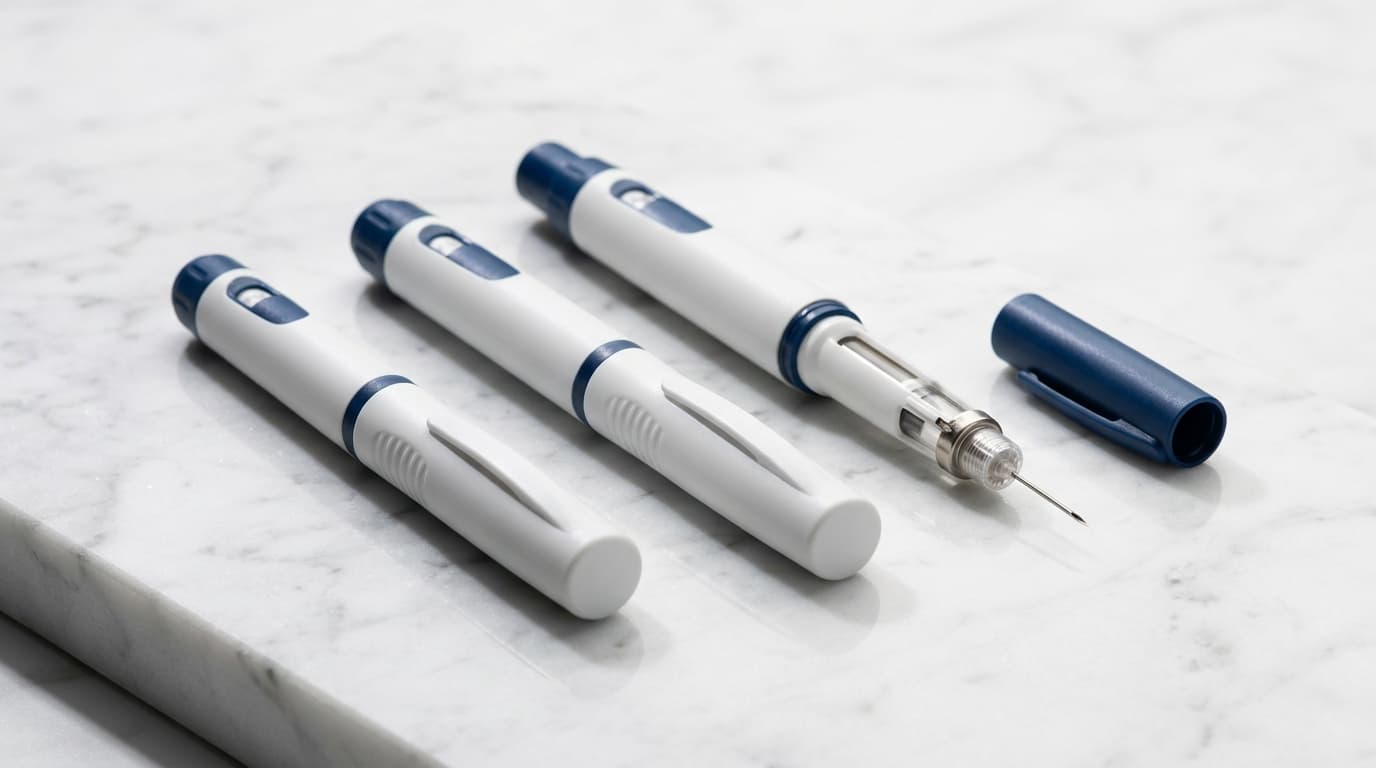
GLP-1 dosage guide: titration schedules for Ozempic, Wegovy, Mounjaro, and Zepbound. Why slow titration matters and what to expect at each dose level.
Your prescriber hands you a pen and says, "Start at the lowest dose." You go home, take your first injection, and then open your phone to search for what comes next. How long do you stay at this dose? When do you go up? What happens if the side effects are too much? What if you do not feel anything at all?
If you are looking for clarity on your dosing schedule, you are in the right place. Titration, the gradual increase of medication dose over time, is one of the most important aspects of GLP-1 treatment, and it is designed entirely around keeping your body comfortable while your system adapts.
Why Titration Exists
GLP-1 receptor agonists are potent medications. Starting at the full therapeutic dose would overwhelm your gastrointestinal system, leading to severe nausea, vomiting, and potentially dehydration. Titration gives your body time to adjust to each level before moving to the next.
Think of it as your body learning a new language. Each dose level is a new lesson. You need time to absorb it before you can handle the next one. Rushing leads to frustration. Patience leads to fluency.
Research from the STEP and SURMOUNT trials consistently shows that slow, guided titration reduces the severity and duration of gastrointestinal side effects. Your prescriber is not being cautious for its own sake. The schedule is the plan.
Ozempic (Semaglutide) Titration Schedule
Ozempic is FDA-approved for type 2 diabetes. The titration schedule:
- Weeks 1-4: 0.25mg weekly (initiation dose, not the therapeutic target)
- Weeks 5-8: 0.5mg weekly (first therapeutic dose for blood sugar control)
- Week 9 onward: 1.0mg weekly if additional glycemic control is needed
- Optional: 2.0mg weekly if 1.0mg is insufficient after at least 4 weeks
The 0.25mg starting dose is sub-therapeutic for most people. Its purpose is purely to acclimate your body. If you do not feel much at this dose, that is expected.
Wegovy (Semaglutide) Titration Schedule
Wegovy is FDA-approved for chronic weight management. It uses the same molecule as Ozempic but with a more extended titration to a higher target dose:
- Weeks 1-4: 0.25mg weekly
- Weeks 5-8: 0.5mg weekly
- Weeks 9-12: 1.0mg weekly
- Weeks 13-16: 1.7mg weekly
- Week 17 onward: 2.4mg weekly (maintenance dose)
The full titration to the 2.4mg maintenance dose takes approximately four months. This is intentional. The STEP trials, which produced the headline weight loss results, used this exact schedule. Deviating from it, particularly by escalating faster, increases the risk of side effects without improving outcomes.
Mounjaro (Tirzepatide) Titration Schedule
Mounjaro is FDA-approved for type 2 diabetes. Its titration:
- Weeks 1-4: 2.5mg weekly (initiation dose)
- Weeks 5-8: 5mg weekly (first therapeutic dose)
- Beyond week 8: increase by 2.5mg increments every 4 weeks as needed
- Available doses: 7.5mg, 10mg, 12.5mg, 15mg
Mounjaro offers more dose flexibility than semaglutide, with six distinct dose levels. This allows prescribers to find the dose where you are getting meaningful benefit with tolerable side effects, rather than pushing to the maximum.
Zepbound (Tirzepatide) Titration Schedule
Zepbound is FDA-approved for chronic weight management and uses the same molecule as Mounjaro:
- Weeks 1-4: 2.5mg weekly
- Weeks 5-8: 5mg weekly
- Beyond week 8: increase by 2.5mg increments every 4 weeks as clinically indicated
- Target dose range: 5mg to 15mg, depending on individual response
The SURMOUNT-1 trial tested 5mg, 10mg, and 15mg, finding meaningful weight loss at all three doses: 15%, 19.5%, and 22.5% respectively. This means your prescriber may find that a mid-range dose gives you the results you need without pushing to the highest level.
What to Expect at Each Stage
Starting dose (0.25mg semaglutide / 2.5mg tirzepatide): Many people feel little to no effect. Some notice mildly reduced appetite or slight nausea. This is the "getting to know each other" phase. Do not be discouraged if the scale does not move. If you are curious about what else the first month typically looks like, our first-month guide covers week-by-week details.
First therapeutic dose (0.5mg semaglutide / 5mg tirzepatide): This is where most people begin to notice meaningful appetite reduction. Nausea may increase temporarily. Side effects tend to peak in the first 1-2 weeks at a new dose and then stabilize.
Mid-range doses: Appetite suppression typically intensifies. Some people find their ideal dose here, with strong enough effects to support their goals and manageable side effects. Not everyone needs the maximum dose.
Maintenance dose: Once you reach a dose that balances effectiveness with tolerability, you stay there. Your prescriber will reassess periodically, but the goal is stable, sustainable treatment, not constant escalation.
Common Questions About Titration
What if I cannot tolerate a dose increase? Your prescriber may extend your time at the current dose (staying 8 weeks instead of 4) or even step back to a lower dose temporarily. The schedule is a guide, not a mandate. Flexibility is built in.
Should I go up if the current dose is working? Not necessarily. If you are seeing meaningful progress at your current dose with tolerable side effects, there may be no reason to increase. Higher doses mean potentially more side effects. Discuss with your prescriber whether increasing serves your specific goals.
What if I miss a dose? For weekly injections, take the missed dose as soon as you remember, as long as the next scheduled dose is at least 2 days (48 hours) away. If it is closer than that, skip the missed dose and resume your regular schedule. Never double up.
Can I titrate faster if I feel fine? It is not recommended, even if you are tolerating the current dose well. Side effects can emerge at the next level that you did not experience at lower doses. The 4-week minimum at each level gives your body adequate time to adapt.
If you have been on a stable dose for a while and feel like the medication has stopped working, a dose adjustment may be part of the conversation, but it should be guided by your prescriber.
The Pen Click Question
For Ozempic pens, different doses require different numbers of clicks on the dose selector. If you are on a dose that uses a multi-dose pen and want to verify you are dialing the correct amount, our pen click counter can help you confirm.
Patience Is Part of the Medicine
It can feel frustrating to spend months working up to a dose when you know the results you want are ahead of you. But the titration period is not wasted time. It is the period where your body builds tolerance, where you learn how the medication affects you, and where you begin building the habits that will sustain your progress regardless of the dose you are on.
Every week at a lower dose is a week of adjustment, learning, and preparation. Trust the schedule. Trust your prescriber. And trust your body's ability to adapt.
Key Takeaways
- All GLP-1 medications follow a gradual titration schedule to minimize GI side effects, typically increasing every 4 weeks
- Semaglutide (Wegovy) titrates from 0.25mg to 2.4mg over about 4 months; tirzepatide (Zepbound) from 2.5mg to up to 15mg
- Not everyone needs the maximum dose. Many people find meaningful results at mid-range doses with fewer side effects
- If you cannot tolerate a dose increase, your prescriber can extend time at the current dose or temporarily step back
- The starting dose is sub-therapeutic by design. If you feel little effect, that is normal and expected
Verify your dose: Use the pen click counter to make sure you are dialing the correct amount on your injection pen.
Stay informed: Join the Gila newsletter for dosing updates, medication news, and practical GLP-1 guidance.
Track your journey: Join the Gila pilot program to log your dose changes, side effects, and progress at each titration level.
Related Articles

Moving Less on GLP-1: The Activity Drop Nobody Warns You About
A 2026 study using Fitbit data found people on GLP-1s moved less, not more — daily steps fell from 5,047 to 4,487. Here's why your body quietly slows down when you eat less, and the gentle way to protect muscle with movement and enough protein.
Read more →
Stopping and Restarting GLP-1 Is Normal — Here's What Holds the Loss
💡 **Your Journey, Your Habits!** New data from ENDO 2026 reveals that stopping and restarting GLP-1 medication is a common chapter for many, not a failure! This isn't about perfection, but about realizing that what truly anchors your weight loss through any pause are the powerful habits you build. So, let's use this window to focus on creating a sustainable foundation that outlasts any prescription!
Read more →
GLP-1 Persistence Statistics 2026: The Start-and-Stop Numbers, Honestly
GLP-1 persistence statistics for 2026, read honestly: how many people stop (about 4 in 10 in year one), how many restart (most of them), why they pause, and the behavior layer that separates regain from kept loss. Every figure linked to a primary source.
Read more →Ready to start your GLP-1 journey?
Gila helps you build lasting habits, understand your body, and stay on track. Join the pilot for free.
Join the Pilot