Ozempic vs Mounjaro: Which GLP-1 Is Right for You?

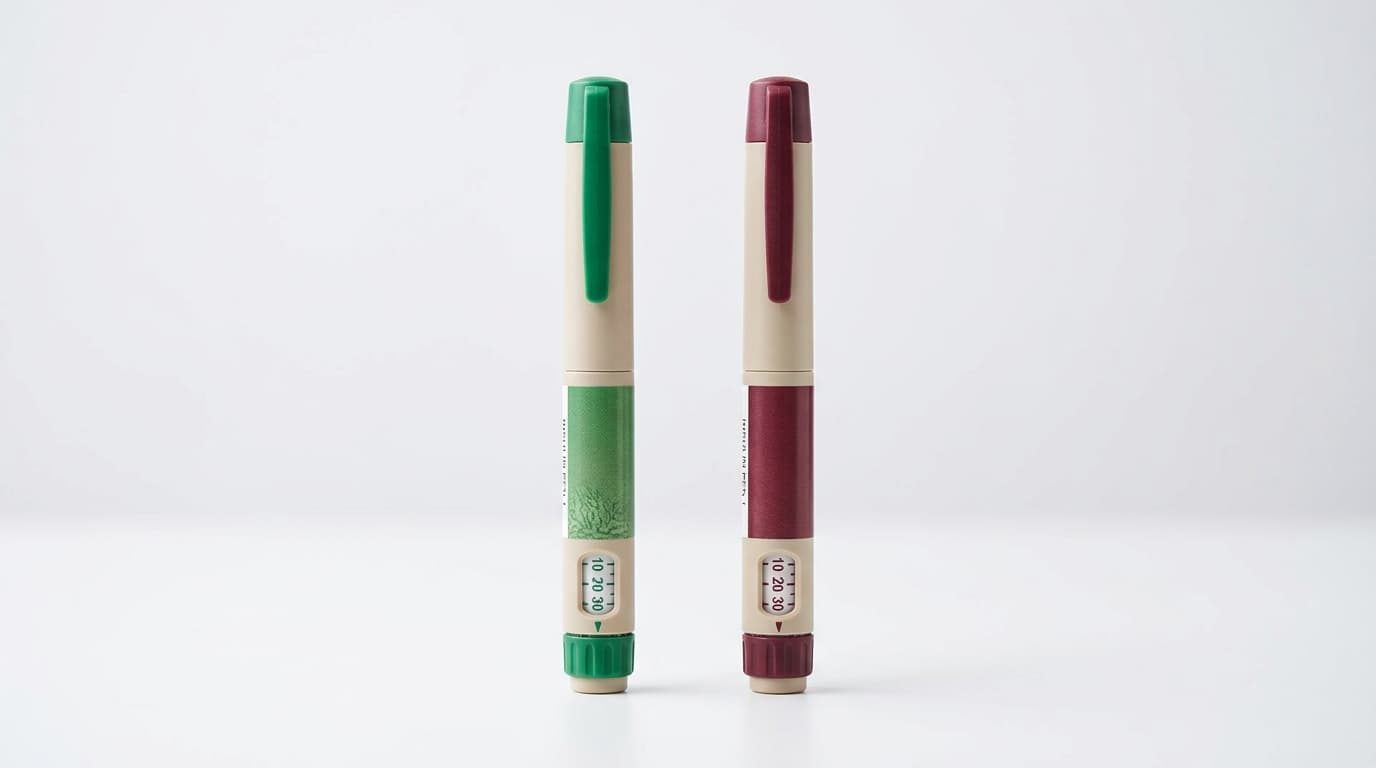
Ozempic vs Mounjaro: compare semaglutide and tirzepatide side by side. Weight loss data, side effects, dosing, cost, and which GLP-1 may suit your needs.
If you are weighing Ozempic against Mounjaro, you are probably deep in research mode, toggling between tabs, collecting opinions, and trying to figure out which medication is the better fit for your body and your life. That is a reasonable place to be. These are two of the most talked-about medications in a generation, and the differences between them are real.
This is not a recommendation. Your prescriber knows your medical history, your metabolic profile, and your goals in a way no article can replicate. What this is: a clear, data-grounded comparison so you can walk into that conversation informed and confident.
How They Work: One Receptor vs Two
Ozempic (semaglutide) is a GLP-1 receptor agonist. It mimics the natural hormone GLP-1, which your gut releases after eating. GLP-1 slows gastric emptying, signals satiety to your brain, and helps regulate blood sugar. Semaglutide does this with greater potency and a longer half-life than your body's own GLP-1.
Mounjaro (tirzepatide) is a dual GIP/GLP-1 receptor agonist. It activates the same GLP-1 pathway as Ozempic, but also targets GIP (glucose-dependent insulinotropic polypeptide) receptors. GIP plays a role in fat metabolism, insulin secretion, and energy balance. By engaging both receptors, tirzepatide creates a broader metabolic effect.
Think of it this way: semaglutide turns one dial. Tirzepatide turns two. Whether turning two dials produces meaningfully better outcomes for you depends on your individual biology.
Weight Loss: What the Trials Show
Both medications have been studied in large, rigorous clinical trials. Here is what the data says.
Semaglutide (Wegovy, the weight-management version of Ozempic): The STEP 1 trial, published in the New England Journal of Medicine (2021), found that participants on semaglutide 2.4mg lost an average of 14.9% of their body weight over 68 weeks, compared to 2.4% with placebo.
Tirzepatide (Zepbound, the weight-management version of Mounjaro): The SURMOUNT-1 trial, also published in the New England Journal of Medicine (2022), showed that participants on the highest dose of tirzepatide (15mg) lost an average of 22.5% of their body weight over 72 weeks. Even the lowest dose (5mg) produced 15% weight loss.
These are population averages. Individual results vary significantly based on starting weight, metabolic health, adherence, and lifestyle factors. But the trend is consistent across studies: tirzepatide has produced greater average weight loss in head-to-head comparisons.
Side Effects: Similar but Not Identical
Both medications share a common side effect profile rooted in their GLP-1 activity. The most frequently reported effects are gastrointestinal:
- Nausea: Reported in approximately 44% of semaglutide users (STEP 1) and 24-33% of tirzepatide users (SURMOUNT-1), depending on dose. Most nausea is mild to moderate and tends to diminish over the first four to eight weeks.
- Constipation: Affects roughly 24% of semaglutide users and 17-23% of tirzepatide users. Managing GI side effects with hydration, fiber, and meal timing can make a significant difference.
- Diarrhea: More commonly reported with tirzepatide (up to 21% at higher doses) than semaglutide (approximately 8%).
- Injection site reactions: Mild redness or itching at the injection site occurs with both medications and typically resolves within a day.
Serious side effects are rare for both but include pancreatitis, gallbladder issues, and potential thyroid concerns (a boxed warning based on animal studies). If you are navigating early side effects, our guide to your first month on GLP-1s walks through what to expect week by week.
Dosing and Titration
Ozempic starts at 0.25mg weekly for four weeks, then increases to 0.5mg. It can be further titrated to 1.0mg and, more recently, 2.0mg based on response and tolerability. Wegovy follows a similar escalation to a target of 2.4mg.
Mounjaro starts at 2.5mg weekly for four weeks, then increases to 5mg. From there, it can be titrated in 2.5mg increments up to a maximum of 15mg. The broader dose range gives prescribers more flexibility to find the right level for each person.
Both medications are weekly subcutaneous injections administered via auto-injector pens. The injection process is nearly identical.
Cost: A Significant Factor
Without insurance, both medications carry substantial list prices:
- Ozempic: approximately $900 to $1,000 per month
- Wegovy: approximately $1,350 per month
- Mounjaro: approximately $1,000 to $1,200 per month
- Zepbound: approximately $1,000 to $1,060 per month
Insurance coverage varies widely. Some plans cover one but not the other, often depending on whether the indication is type 2 diabetes or weight management. Manufacturer savings programs exist for both. Eli Lilly (Mounjaro/Zepbound) and Novo Nordisk (Ozempic/Wegovy) each offer copay cards for commercially insured patients, though the savings and eligibility criteria change frequently.
If cost is a major consideration in your decision, our GLP-1 cost calculator can help you estimate your monthly expenses across different medications and coverage scenarios.
Availability
Both medications have experienced supply shortages. Semaglutide shortages have been particularly well-documented, though availability has improved in many markets. Tirzepatide has also faced intermittent supply constraints, especially at certain dose levels. Your pharmacy and prescriber can advise on current availability in your area.
Who Might Each Suit Best
Again, this is not medical advice, but general patterns from the clinical data:
Semaglutide may be a good starting point if:
- You have a longer track record of real-world safety data (semaglutide has been available since 2017)
- Your primary concern is modest, steady weight loss with well-characterized side effects
- Your insurance covers it more favorably
- You prefer a medication with extensive cardiovascular outcome data (the SELECT trial showed semaglutide reduced major cardiovascular events by 20%)
Tirzepatide may be worth discussing if:
- You are looking for potentially greater weight loss
- You have type 2 diabetes (the dual mechanism addresses insulin resistance through both GLP-1 and GIP pathways)
- You have tried semaglutide and plateaued or found side effects difficult
- You respond to the broader dose flexibility (seven dose levels vs four)
The Decision Is Yours to Make
No article, forum post, or social media anecdote can tell you which medication is right for your body. What the data can do is arm you with the information to have a productive conversation with your healthcare provider.
Both semaglutide and tirzepatide are significant medical tools. Both work. Both have trade-offs. The best choice is the one that fits your health profile, your financial situation, your tolerance for side effects, and, crucially, the one you will actually take consistently.
Whatever you choose, the medication is just one part of your journey. The habits you build, the identity you shape, and the support you surround yourself with, those are what make the change last.
Key Takeaways
- Semaglutide (Ozempic/Wegovy) targets GLP-1 receptors; tirzepatide (Mounjaro/Zepbound) targets both GLP-1 and GIP receptors
- SURMOUNT-1 showed tirzepatide produced greater average weight loss (22.5%) than semaglutide in STEP 1 (14.9%), though individual results vary
- Side effect profiles are similar, with nausea being more common with semaglutide and diarrhea more common with tirzepatide
- Cost without insurance ranges from $900 to $1,350 per month for both medications
- The best medication is the one that fits your health profile, budget, and life, decided with your prescriber
Estimate your costs: Use the GLP-1 cost calculator to compare monthly expenses for each medication.
Stay informed: Join the Gila newsletter for evidence-based GLP-1 insights delivered to your inbox.
Track your journey: Join the Gila pilot program to log side effects, meals, and progress with a companion that understands your path.
Related Articles

Moving Less on GLP-1: The Activity Drop Nobody Warns You About
A 2026 study using Fitbit data found people on GLP-1s moved less, not more — daily steps fell from 5,047 to 4,487. Here's why your body quietly slows down when you eat less, and the gentle way to protect muscle with movement and enough protein.
Read more →
Stopping and Restarting GLP-1 Is Normal — Here's What Holds the Loss
💡 **Your Journey, Your Habits!** New data from ENDO 2026 reveals that stopping and restarting GLP-1 medication is a common chapter for many, not a failure! This isn't about perfection, but about realizing that what truly anchors your weight loss through any pause are the powerful habits you build. So, let's use this window to focus on creating a sustainable foundation that outlasts any prescription!
Read more →
GLP-1 Persistence Statistics 2026: The Start-and-Stop Numbers, Honestly
GLP-1 persistence statistics for 2026, read honestly: how many people stop (about 4 in 10 in year one), how many restart (most of them), why they pause, and the behavior layer that separates regain from kept loss. Every figure linked to a primary source.
Read more →Ready to start your GLP-1 journey?
Gila helps you build lasting habits, understand your body, and stay on track. Join the pilot for free.
Join the Pilot