Compounded GLP-1s in 2026: What FDA's April 30 Proposal Means for 503B and 503A Patients

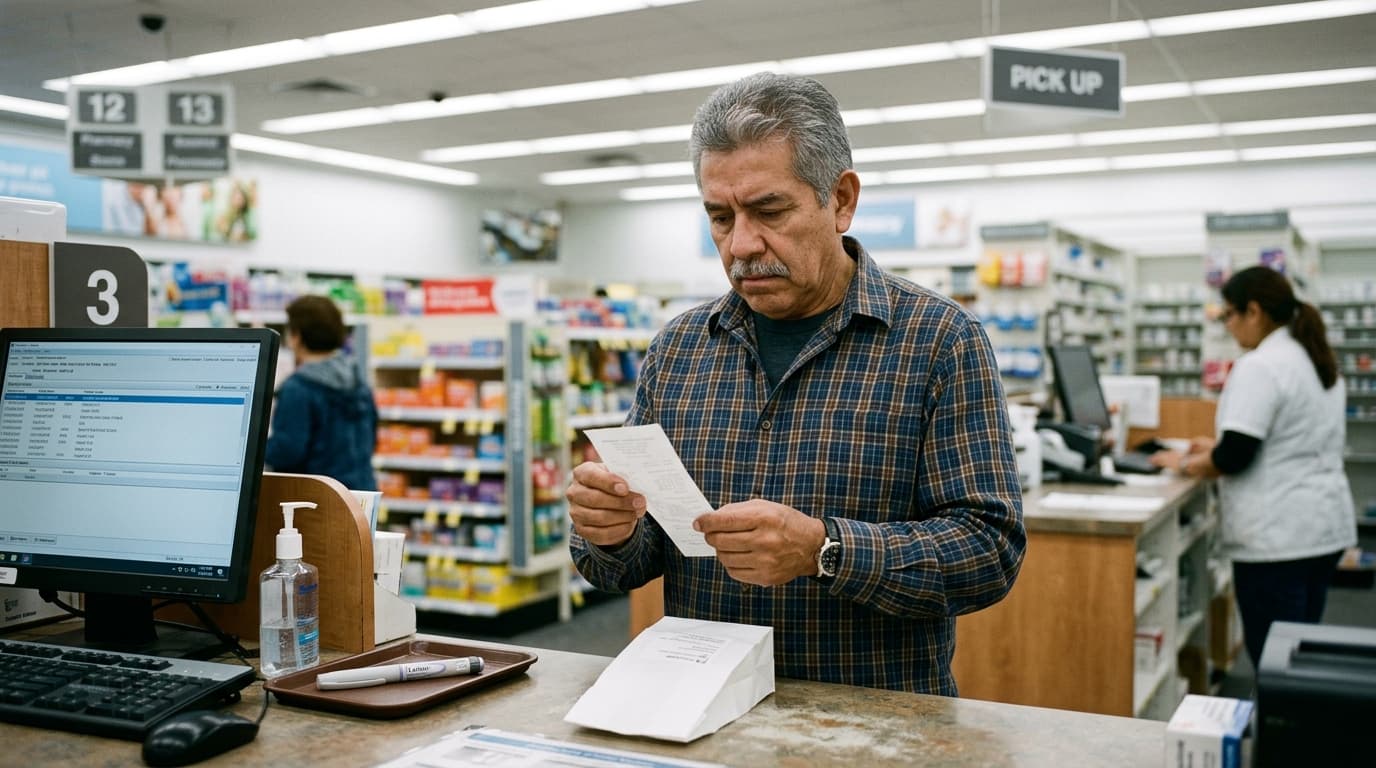
🚨 **Heads Up, Team!** The FDA just proposed changes that could impact compounded GLP-1 access from 503B facilities by 2026. This isn't immediate, but it's a call to action: connect with your prescriber now to proactively plan your transition to approved medications, ensuring your incredible progress continues seamlessly. Remember, your habits are your superpower, and we'll navigate any shifts together!
TL;DR
On April 30, 2026, the FDA proposed adding semaglutide, tirzepatide, and liraglutide to the list of bulk drug substances that 503B outsourcing facilities cannot compound. Combined with an April 1 enforcement update tightening 503A compounding (a safe-harbor threshold of four prescriptions per drug per month), the compounded GLP-1 path most telehealth platforms relied on is closing. A 60-day comment period runs through June 29, 2026 — and patients can submit comments to the FDA docket. If you are on compounded semaglutide or tirzepatide, your prescription is still legal today, but a transition plan is the right next conversation with your prescriber.
Key Takeaways
- FDA's April 30 proposal targets 503B outsourcing facilities — the bulk-compounding channel that supplies most large telehealth GLP-1 platforms. It does not directly close 503A pharmacies, but FDA's April 1 statement narrowed that path too.
- FDA Commissioner Makary's stated rationale: "When FDA-approved drugs are available, outsourcing facilities cannot lawfully compound using bulk drug substances unless there is a clear clinical need." (FDA press release, Apr 30 2026)
- The comment period closes June 29, 2026. Patients, prescribers, and platforms can submit public comments to the FDA docket. After that, FDA reviews and issues a final rule — typically 6–18 months from proposal close.
- 503B and 503A are different. 503B = bulk compounding under FDA oversight, mostly used by telehealth and clinics. 503A = single-patient compounding by traditional pharmacies, mostly under state-board oversight. The April 30 proposal is 503B-specific.
- The April 1 enforcement update tightened 503A, introducing a four-prescriptions-per-drug-per-month safe-harbor threshold and a more explicit "essentially a copy" definition. Foley & Lardner legal analysis
- Existing prescriptions remain legal during the comment period. Don't stop your medication abruptly. Talk to your prescriber about a transition plan well before any final rule lands.
What FDA actually proposed on April 30
The FDA published a notice in the Federal Register proposing to add three GLP-1 active pharmaceutical ingredients — semaglutide (Ozempic, Wegovy, Rybelsus), tirzepatide (Mounjaro, Zepbound), and liraglutide (Saxenda, Victoza) — to the list of bulk substances that 503B outsourcing facilities cannot compound.
The legal mechanism is straightforward. Under section 503B of the Federal Food, Drug, and Cosmetic Act, an outsourcing facility may compound from bulk drug substances only if those substances are on a clinical-need-justified list maintained by FDA, or if the corresponding FDA-approved drug is on the FDA shortage list. Neither condition currently applies to GLP-1s: semaglutide and tirzepatide came off the shortage list in late 2024, and FDA's April 30 finding declares "no clinical need" to compound them in bulk.
Commissioner Marty Makary framed the action as routine enforcement of existing law. "This action reflects our responsibility to protect patients and preserve the integrity of the drug approval process," he said in the FDA announcement.
The proposal is not yet final. A 60-day public comment period runs through June 29, 2026. After comments close, FDA reviews and either finalizes, modifies, or withdraws — typically 6 to 18 months from proposal close.
The 503B vs 503A distinction matters more than the headline
Most patients on compounded GLP-1s through a telehealth platform — Hims, Ro, Henry Meds, Mochi Health, and similar — are receiving product made at a 503B outsourcing facility. Those facilities ship in volume, often without a patient-specific prescription tied to each batch. The April 30 proposal closes that channel for GLP-1s.
The other channel, 503A, is what your local independent pharmacy uses when a doctor calls in a one-off prescription that the pharmacist makes that day for that patient. 503A is regulated mostly by state boards, with FDA stepping in on misbranding and adulteration questions. A small number of telehealth platforms route some volume through 503A.
The April 30 proposal is 503B-specific. But FDA had already tightened 503A in an April 1, 2026 clarification — a "safe harbor" stating FDA will not enforce against 503A compounders filling four or fewer prescriptions for that drug product per calendar month, and a tighter "essentially a copy" definition that requires prescribers to document a clinically significant reason for compounding rather than dispensing the FDA-approved drug. Together, the two actions narrow both compounding paths in the span of a month.
Why the rationale points to FDA-approved alternatives
The "no clinical need" finding rests on a market that looks very different from 2023. When the FDA originally allowed compounded semaglutide and tirzepatide to fill prescriptions, both were on the shortage list — Novo Nordisk and Eli Lilly couldn't keep up with demand. Now both manufacturers have stabilized supply, and the price story has shifted too. The injectable Wegovy is priced around $1,349/month list, but the oral Wegovy pill launched at $675/month and Eli Lilly's Foundayo entered the US at $149/month for the starter dose. Cash-pay programs (NovoCare, LillyDirect) bring eligible patients to under $500/month.
That is still more expensive than typical compounded prices ($200–$400/month). But from FDA's perspective, the existence of FDA-approved alternatives — at any price — removes the legal foundation that made bulk compounding permissible.
For patients, the trade-off is real: brand pricing remains a barrier, even with savings cards. The mechanism FDA uses to keep prices in check is approval competition, not price regulation — meaning that the new oral pills and the eventual generic competition carry a lot of the cost-control hopes.
What this means for patients on compounded GLP-1s today
Your current prescription is legal. Nothing about the April 30 proposal makes today's compounded GLP-1 illegal, and the comment period through June 29 keeps the current rules in place. A final rule, if FDA issues one, would typically include a transition window before enforcement.
Transition planning is the right conversation now. If you are paying $200–$400/month for compounded semaglutide or tirzepatide through a telehealth platform, ask your prescriber:
- Will my prescription continue at the same source if FDA finalizes the rule?
- Am I eligible for the brand savings card (Wegovy NovoCare, Zepbound LillyDirect)?
- If I move to an oral pill (Wegovy pill at $675/month, Foundayo at $149/month starter), what does that change about my dosing schedule and side-effect risk?
- If I switch to brand, what dose corresponds to the compounded dose I'm on now?
If cost is the gating issue, you can run the math on a few scenarios with the Gila cost calculator before the conversation. Knowing your monthly out-of-pocket on each option turns "what should I do" into a more concrete decision.
Submit a comment if your patient experience is worth being on the record. The FDA docket accepts comments through June 29, 2026. Patient comments routinely shape final rules, especially when individual experiences contradict the assumed availability of approved alternatives. Submission instructions are in the FDA press release.
Don't stop your medication abruptly. Stopping a GLP-1 cold turkey is a separate decision with its own physiology — the kind of choice that should never be driven by an enforcement timeline you can plan around.
What this means for the GLP-1 community
The compounded GLP-1 market has been the de facto access ramp for hundreds of thousands of US patients who couldn't afford brand pricing. April 30 is the clearest signal yet that the access ramp is closing — at least through 503B. The shape of the market in 2027 looks like more oral pills, more pricing pressure on brand injectables, and a slow re-routing of patients into FDA-approved channels (with the savings-card friction that implies).
For Gila's pilot community: the choice of medication has always been less load-bearing than the habits that surround it. The medication quiets the noise; the habits make the medication's effect persist after the prescription changes, the dose changes, or — as with this rule — the supply channel changes. A transition between supply channels is exactly the kind of moment where the habit architecture you built around the medication is what carries you through.
We'll keep watching the docket. If FDA modifies the proposal or telehealth platforms publish transition guidance, we'll update this article rather than spinning a new one — the goal here is one accurate page that holds up for the comment period and beyond.
Frequently asked questions
What did the FDA propose on April 30, 2026? The FDA proposed adding semaglutide, tirzepatide, and liraglutide to the list of bulk drug substances that 503B outsourcing facilities cannot compound. The proposal cites that with FDA-approved versions widely available, there is no longer a clinical need to allow bulk compounding.
Will compounded Ozempic become illegal? Not immediately. The proposal is in a public comment period until June 29, 2026. If finalized, it would only affect 503B outsourcing facilities (large-scale compounders). 503A pharmacies — which compound on individual prescription for individual patients — are not directly affected, though FDA can act on them separately.
What is the difference between 503A and 503B compounding? 503A pharmacies compound drugs for individual patients with a specific prescription, regulated mainly by state boards. 503B outsourcing facilities compound in bulk under FDA oversight, often supplying clinics, telehealth platforms, and hospitals. The April 30 proposal targets 503B; 503A access is governed separately.
How will this affect telehealth GLP-1 patients? Most major telehealth GLP-1 prescribers (Hims, Ro, Henry Meds, Mochi Health) source from 503B facilities. If finalized, their bulk compounded supply ends and they must transition patients to brand-name medications, switch to 503A patient-specific compounding, or exit the market. Expect price changes, possible disruptions, and patient communications in the next 60 days.
When does the comment period close? The FDA is accepting comments through June 29, 2026. Patients, providers, and industry can submit comments on regulations.gov under the FDA docket linked in the press release. After June 29, the FDA reviews comments and issues a final rule — typically 6–18 months from proposal close.
What should I do if I am on compounded GLP-1? Three steps: (1) talk to your prescriber about a transition plan to brand-name semaglutide or tirzepatide before any supply change, (2) check your insurance coverage and savings-card eligibility for Wegovy or Zepbound, (3) submit a public comment by June 29, 2026 if you want your patient experience on the record. Don't stop your medication abruptly — speak to your provider first.
Editor's note: This article is research and news commentary. It is not medical advice. For decisions about your own medication, talk to your prescriber.
Related reading on Gila:
- GLP-1 Costs in 2026: $1,349 → $675
- Generic GLP-1s 2026: $14/Month Indian Semaglutide and the Medicare BALANCE Model
- Stopping GLP-1 Cold Turkey: What the Research Says
- Cost Calculator: estimate your GLP-1 monthly out-of-pocket
Primary sources:
Related Articles

Moving Less on GLP-1: The Activity Drop Nobody Warns You About
A 2026 study using Fitbit data found people on GLP-1s moved less, not more — daily steps fell from 5,047 to 4,487. Here's why your body quietly slows down when you eat less, and the gentle way to protect muscle with movement and enough protein.
Read more →
Stopping and Restarting GLP-1 Is Normal — Here's What Holds the Loss
💡 **Your Journey, Your Habits!** New data from ENDO 2026 reveals that stopping and restarting GLP-1 medication is a common chapter for many, not a failure! This isn't about perfection, but about realizing that what truly anchors your weight loss through any pause are the powerful habits you build. So, let's use this window to focus on creating a sustainable foundation that outlasts any prescription!
Read more →
GLP-1 Persistence Statistics 2026: The Start-and-Stop Numbers, Honestly
GLP-1 persistence statistics for 2026, read honestly: how many people stop (about 4 in 10 in year one), how many restart (most of them), why they pause, and the behavior layer that separates regain from kept loss. Every figure linked to a primary source.
Read more →Ready to start your GLP-1 journey?
Gila helps you build lasting habits, understand your body, and stay on track. Join the pilot for free.
Join the Pilot