GLP-1 Adherence Statistics 2026: Why Persistence Nearly Doubled

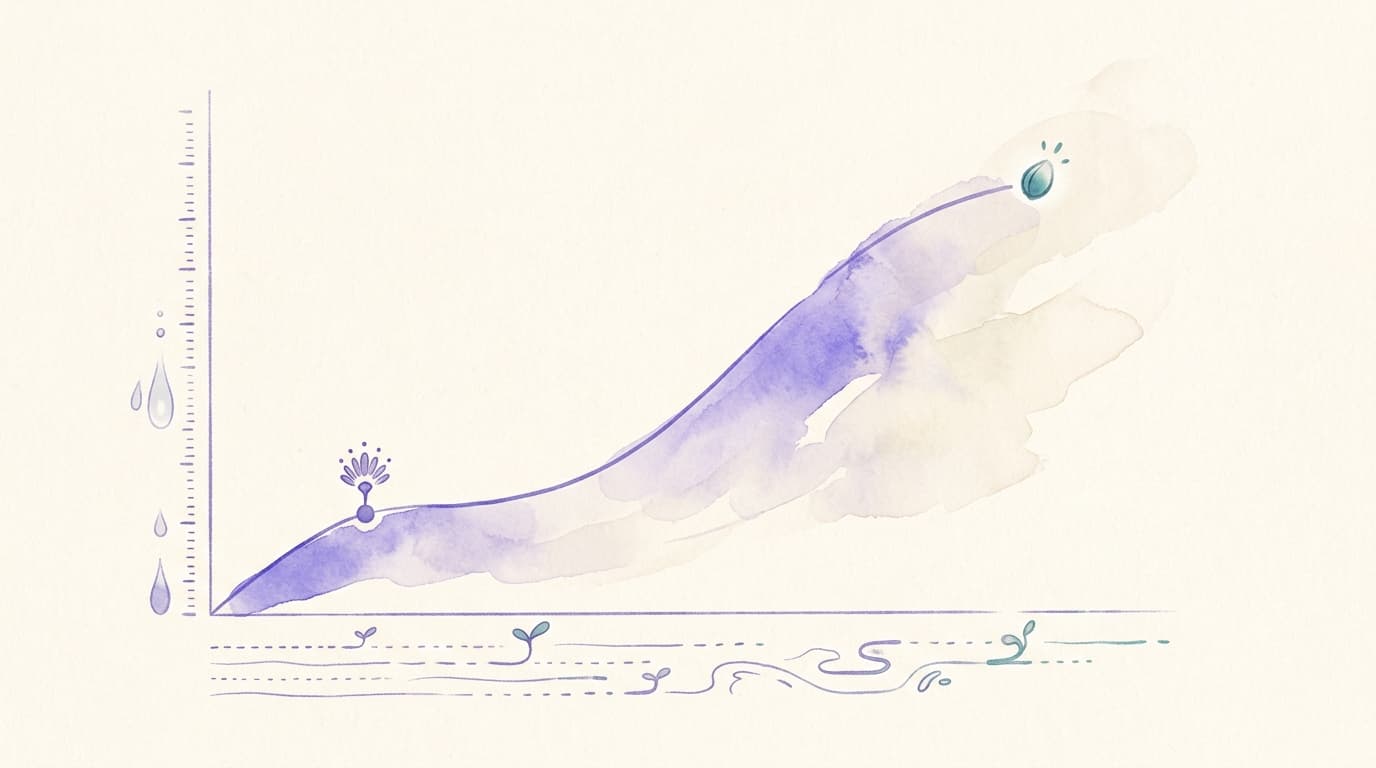
12-month persistence on weight-loss GLP-1s climbed from 33% in 2021 to 63% in 2024. Inside the latest Prime Therapeutics, KFF, and NEJM data — what the new numbers actually say about who stays on therapy, who stops, and why.
In April 2024, the headline number every GLP-1 commentator quoted was a hard one: roughly one in three patients stayed on weight-loss GLP-1s for a full year. By the end of 2024, that number had nearly doubled. Persistence to high-potency obesity GLP-1s climbed from 33.2% in 2021 to 62.6% in 2024 — the largest single-year jump in any modern obesity-medication class (Prime Therapeutics, 2024).
This is the story of those numbers — and what the underlying data actually shows about who stays on a GLP-1, who stops, and why.
Why this update matters
For two years, the dominant adherence narrative came from a single 2023 Prime Therapeutics analysis showing 27% adherence and 32% persistence at 12 months in commercially-insured adults using GLP-1s for weight loss without diabetes (Prime Therapeutics, May 2024). Most coverage of GLP-1 "discontinuation" still cites a version of that 32% number.
The 2024 update tells a different story. As Wegovy and Zepbound supply normalized and insurance coverage expanded, persistence almost doubled. The persistence problem hasn't disappeared — but it has changed shape.
Key takeaways
- 62.6% of patients on high-potency obesity GLP-1s remained on therapy at 12 months in 2024, up from 33.2% in 2021 (Prime Therapeutics, 2024).
- 55.5% of patients starting therapy in the first half of 2024 met the standard 80%+ medication adherence threshold, vs. 30.2% in 2021 (Prime Therapeutics, 2024).
- 12% of US adults are currently taking a GLP-1 for weight, diabetes, or another condition; 18% have ever used one (KFF Health Tracking Poll, Nov 2025).
- 56% of GLP-1 users — including 55% of those with insurance — say the medications are difficult to afford (KFF, 2025).
- 14% of GLP-1 users have stopped the medication specifically because of cost (KFF, 2025).
- 27% of insured GLP-1 users say they paid the full cost of the medication out of pocket (KFF, 2025).
- 1% of Marketplace prescription-drug plans cover Wegovy for weight loss; 82% cover Ozempic, which contains the same molecule but is labeled for diabetes (KFF, 2025).
- The pivotal STEP 1 trial showed a mean weight loss of −14.9% with semaglutide at 68 weeks vs. −2.4% with placebo; 86% of participants reached ≥5% loss (Wilding et al., NEJM 2021).
- SURMOUNT-1 reported 20.9% mean weight loss with tirzepatide 15 mg at 72 weeks (Jastreboff et al., NEJM 2022).
- The SURMOUNT-5 head-to-head trial reported −20.2% with tirzepatide vs. −13.7% with semaglutide at 72 weeks (NEJM, 2025).
- After stopping a GLP-1, real-world claims data shows discontinuation is rarely permanent — patterns of stop-and-restart are common, particularly tied to supply and cost cycles (Prime Therapeutics, 2024).
- Mercer's 2024 analysis of employer plan data found GLP-1 discontinuation rates remain a top concern for benefits leaders, with most employers now layering lifestyle, behavioral, or coaching support around the prescription (Mercer, 2024).
The headline shift: why persistence doubled
Three forces moved the 12-month persistence number from 33% to 63% in three years.
1. Supply normalized. Through 2022 and most of 2023, Wegovy and Mounjaro/Zepbound were on FDA shortage lists. Patients who started a starter dose often couldn't get the next titration step. By late 2023, Novo Nordisk and Eli Lilly had ramped manufacturing; Prime Therapeutics' analysts concluded that supply normalization was the single largest contributor to the persistence jump (Prime Therapeutics, 2024).
2. Insurance coverage widened — selectively. KFF's 2025 Employer Health Benefits Survey found a notable year-over-year increase in the share of large employers covering GLP-1s for weight loss (KFF, 2025). Marketplace plans, however, lag dramatically — Wegovy is on just 1% of formularies vs. 82% for the diabetes-only Ozempic.
3. Patient self-selection improved. Early adopters in 2021–2022 included many people who had paid out of pocket for cosmetic weight goals. The 2024 cohort includes more patients with covered coverage and higher BMI, both of which independently predict longer persistence in published claims analyses (Prime Therapeutics, 2024).
Adherence vs. persistence — the two numbers people confuse
Most "GLP-1 quit" coverage uses the words interchangeably. They are not the same.
- Persistence measures whether the patient is still on therapy at a given time point (e.g., 12 months).
- Adherence measures how consistently the patient takes the medication during the period they are on therapy — usually expressed as the proportion of days covered (PDC ≥ 80%).
A patient can be persistent but non-adherent (still picks up refills but skips weeks). They can also be adherent and then suddenly discontinue. Both numbers improved meaningfully between 2021 and 2024:
| Year | Persistence at 12 mo. | Adherence (PDC ≥ 80%) |
|---|---|---|
| 2021 | 33.2% | 30.2% |
| 2022 | 34.1% | — |
| 2023 | 40.4% | — |
| 2024 (H1) | 62.6% | 55.5% |
Source: Prime Therapeutics, 2024 real-world analysis.
What the pivotal trials predicted vs. what real-world data shows
The randomized trials that brought GLP-1s to market were structured for optimal adherence: free medication, dietitian support, structured visits, no insurance friction. Their numbers set expectations:
- STEP 1 (semaglutide 2.4 mg, 68 weeks): −14.9% mean body weight; 86% achieved ≥5% loss (Wilding et al., NEJM 2021).
- SURMOUNT-1 (tirzepatide 15 mg, 72 weeks): 20.9% mean weight loss; the largest reduction reported for any approved obesity medication at the time (Jastreboff et al., NEJM 2022).
- SURMOUNT-5 (head-to-head, 72 weeks, 2025): tirzepatide −20.2% vs. semaglutide −13.7% (NEJM, 2025).
Real-world weight loss in commercially-insured cohorts trends 30–50% lower than trial numbers, primarily because real patients miss doses, can't get refills, and don't receive embedded lifestyle counseling. The persistence gap is the single biggest driver of that delta — patients who stay on therapy through full titration get closer to trial-grade outcomes.
Why people quit: the four real reasons
Pulled from Prime Therapeutics' real-world claims, KFF survey data, and Mercer's 2024 employer-plan analysis, four discontinuation drivers dominate:
- Cost — 14% of all GLP-1 users say they have stopped because of cost. Among insured users who paid full price, that share is meaningfully higher (KFF, 2025).
- Side effects — primarily GI (nausea, vomiting, constipation), most concentrated in the first 8–12 weeks during titration. The Penn AI Reddit-mining analysis that aggregated 400K+ patient posts identified side effect categories not surfaced in the original trials (see our breakdown of the Penn study).
- Supply — gaps in pharmacy availability, especially during 2022–2023 shortages, accounted for a meaningful share of "stopped" patients who would have continued otherwise.
- Plateau or perceived "stopped working" — patients who hit a weight-loss plateau on a sub-maximal dose are at elevated discontinuation risk. The clinical reality is more often titration-related than tolerance-related (see our piece on why Ozempic appears to "stop working").
The cost wall: 2025 insurance coverage statistics
Coverage is the hard ceiling on persistence. The 2025 numbers:
- Wegovy is on 1% of Marketplace prescription-drug plans for its labeled weight-loss indication.
- Ozempic — same molecule, diabetes label — is on 82% of Marketplace plans.
- Among employer-sponsored plans, large-employer coverage of GLP-1s for weight loss expanded notably in 2025 vs. 2024 — but still trails coverage for the diabetes indication by a wide margin.
- 27% of insured GLP-1 users say they paid the full cost of the drug themselves — meaning either no coverage or a very high coinsurance/deductible.
- 56% of all GLP-1 users say the medications are difficult to afford.
Sources: KFF, 2025 GLP-1 poll, KFF, 2025 Marketplace coverage analysis.
What happens after stopping
The discontinuation conversation has shifted from "will I lose progress" to "how much, how fast, and what predicts it." The published research is clear that weight regain after stopping is the rule, not the exception — but the trajectory varies.
For a research-grade view of what trial extensions show after withdrawal, see our evidence summary on weight regain after stopping a GLP-1. For the tactical "should I taper or stop cold" question, our research breakdown on stopping cold turkey covers the published guidance.
The pattern most often missed: in real-world claims, "discontinuation" is frequently a pause, not an exit. Prime Therapeutics' 2024 analysis flagged stop-and-restart cycles tied to supply and cost — patients who appear to have quit at month 8 sometimes re-initiate at month 11 or 14 (Prime Therapeutics, 2024).
What predicts persistence
Across the published 2024 datasets, four factors consistently correlate with staying on therapy past 12 months:
- Insurance coverage tier — patients with fully-covered prescriptions persist at materially higher rates than those paying full price.
- Higher starting BMI — patients above BMI 35 persist longer than those between 27–30, where weight goals are often more cosmetic.
- Presence of comorbidities (cardiovascular disease, sleep apnea) — these shift the prescription from "weight loss" to "medical necessity" in patient framing.
- Reaching the maintenance dose — patients who titrate fully tend to stay on therapy; those stuck at a starter dose are at elevated discontinuation risk.
The behavioral layer — habits, identity, peer support, and consistent self-monitoring — does not appear in claims data because insurers don't capture it. But the published behavioral-medicine literature consistently identifies it as the single largest controllable persistence factor.
What this means for the next 12 months
The persistence number has doubled, but the four discontinuation drivers — cost, side effects, supply, plateau — are still where the next gains will come from. Cost is structural and slow-moving. Supply is now solved for the major brands. That leaves side effect management and plateau navigation as the two areas where patient-side intervention can move outcomes meaningfully.
For people starting a GLP-1 today, the 2024 numbers are the more relevant baseline than the 2021 cohort. A 63% chance of being on therapy at 12 months is a different planning horizon than a 33% chance — and the things that move you from "average" to "above average" are increasingly behavioral. If you want to assess where you are on that axis, our GLP-1 habit readiness assessment is a free 5-minute self-scoring tool. For the longer view on what makes GLP-1 results stick, our editorial on building habits that outlast your prescription covers the behavioral foundations.
Sources
- Prime Therapeutics, "Year-Two Real-World Analysis of GLP-1 Therapy" (2024)
- Prime Therapeutics, "GLP-1 Therapy to Treat Obesity Among Members Without Diabetes — Three-Year Persistence" (2024)
- Prime Therapeutics + Magellan Rx, "Real-World Adherence and Persistence to GLP-1 Receptor Agonists" (May 2024)
- Prime Therapeutics, "GLP-1 Year 2 Cost-Effectiveness Study" (Oct 2024)
- KFF Health Tracking Poll, "1 in 8 Adults Have Taken a GLP-1 Drug" (Nov 2025)
- KFF, "Costly GLP-1 Drugs Are Rarely Covered for Weight Loss by Marketplace Plans" (2025)
- KFF, 2025 Employer Health Benefits Survey
- Wilding JPH et al., "Once-Weekly Semaglutide in Adults with Overweight or Obesity" (STEP 1), NEJM 2021
- Jastreboff AM et al., "Tirzepatide Once Weekly for the Treatment of Obesity" (SURMOUNT-1), NEJM 2022
- Aronne LJ et al., "Tirzepatide as Compared with Semaglutide for the Treatment of Obesity" (SURMOUNT-5), NEJM 2025
- Mercer, "GLP-1 discontinuation affirms need for holistic weight-loss plan" (2024)
Frequently asked questions
Is the "53% of people quit GLP-1s within a year" stat still accurate? No, not for current cohorts. That figure traces to 2021–2022 commercial-claims analyses. The most recent Prime Therapeutics analysis published in 2024 shows 12-month persistence of 62.6% for high-potency obesity GLP-1s — meaning the discontinuation share has dropped to roughly 37%, not 53%.
Why did persistence almost double in three years? Three reasons stack: (1) Wegovy and Zepbound supply normalized after the 2022–2023 shortages, (2) employer-sponsored insurance coverage widened, and (3) the patient mix shifted toward higher-BMI users with stronger insurance support and comorbidities — both of which independently predict longer persistence.
Are tirzepatide users more persistent than semaglutide users? Marginally, in the latest Prime Therapeutics data: tirzepatide showed 64.0% one-year persistence in 2023 and 62.6% in 2024, vs. 62.7% for semaglutide in 2024. Both are now in the same band.
What's the single biggest reason people stop a GLP-1? Cost is the most common single reason in survey data — 14% of all GLP-1 users have stopped because of cost. Side effects, supply gaps, and plateaus together account for most of the remainder.
Do people who stop usually restart? Often, yes. Prime Therapeutics' 2024 analysis flagged frequent stop-and-restart patterns — what looks like permanent discontinuation in month 8 is sometimes a pause that reverses by month 11 or 14, particularly when supply or cost barriers ease.
Matt Cole is the research co-host at Gila. This article draws from Prime Therapeutics real-world claims analyses (2024), the KFF Health Tracking Polls (2024–2025), the STEP 1 (Wilding 2021) and SURMOUNT-1 (Jastreboff 2022) trials in the New England Journal of Medicine, and the SURMOUNT-5 head-to-head trial (NEJM 2025). Editor-in-chief: Sezen Soykut.
Related Articles

Moving Less on GLP-1: The Activity Drop Nobody Warns You About
A 2026 study using Fitbit data found people on GLP-1s moved less, not more — daily steps fell from 5,047 to 4,487. Here's why your body quietly slows down when you eat less, and the gentle way to protect muscle with movement and enough protein.
Read more →
Stopping and Restarting GLP-1 Is Normal — Here's What Holds the Loss
💡 **Your Journey, Your Habits!** New data from ENDO 2026 reveals that stopping and restarting GLP-1 medication is a common chapter for many, not a failure! This isn't about perfection, but about realizing that what truly anchors your weight loss through any pause are the powerful habits you build. So, let's use this window to focus on creating a sustainable foundation that outlasts any prescription!
Read more →
GLP-1 Persistence Statistics 2026: The Start-and-Stop Numbers, Honestly
GLP-1 persistence statistics for 2026, read honestly: how many people stop (about 4 in 10 in year one), how many restart (most of them), why they pause, and the behavior layer that separates regain from kept loss. Every figure linked to a primary source.
Read more →Ready to start your GLP-1 journey?
Gila helps you build lasting habits, understand your body, and stay on track. Join the pilot for free.
Join the Pilot