The FDA Warned 30 GLP-1 Telehealth Companies. Is Yours on the List?

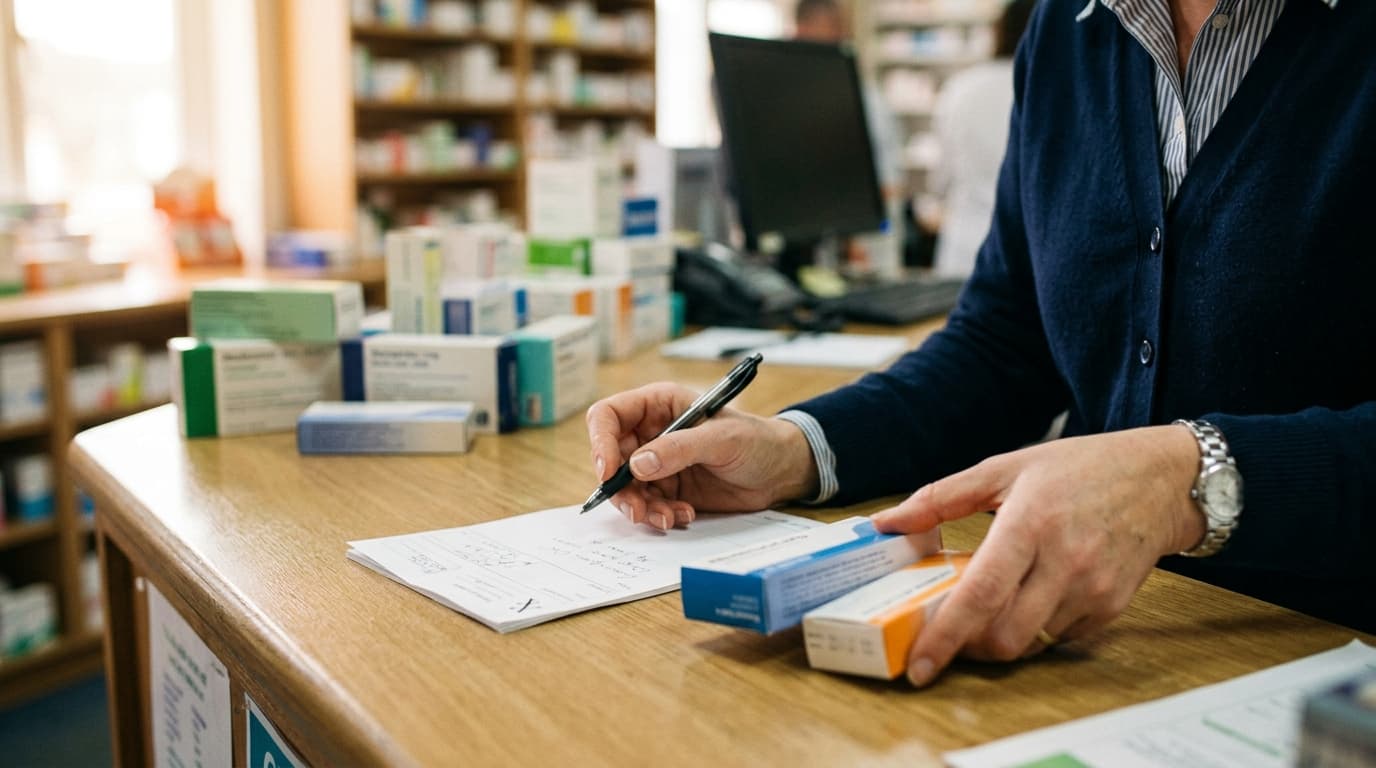
The FDA warned 30 telehealth companies selling unapproved GLP-1 medications. If you order Ozempic, Wegovy, or compounded semaglutide online, here is how to verify your source is safe — and the red flags that mean you should stop ordering immediately.
In early 2026, the FDA issued warning letters to more than 30 telehealth companies for selling compounded or unverified versions of semaglutide and tirzepatide. For millions of people trying to access GLP-1 medications, the news landed somewhere between alarming and confusing.
If you are taking a GLP-1 medication right now and wondering whether your source is legitimate, that concern is reasonable. And there are concrete ways to find out.
What the FDA Warning Actually Says
The FDA's enforcement action targeted companies that were marketing compounded versions of semaglutide and tirzepatide without meeting federal safety standards. Some of these companies were operating through telehealth platforms that prescribed and shipped medications with minimal medical oversight. Others were selling products that contained incorrect doses, contaminants, or active ingredients that had not been verified by independent testing.
The core issue is not that compounding pharmacies are inherently dangerous. Compounding has a legitimate role in medicine, particularly when a patient needs a dose or formulation not commercially available. The issue is that during the GLP-1 shortage of 2023-2025, a market of loosely regulated providers grew rapidly to meet demand, and some of those providers cut corners that put patients at risk.
As of February 2026, the FDA has confirmed that the shortage of semaglutide and tirzepatide has been resolved for most formulations. This matters because compounding pharmacies are generally only authorized to produce copies of drugs that are on the FDA's shortage list. With the shortage resolved, many compounded versions are now being produced without the legal basis that previously permitted them.
Compounded vs. Brand-Name: Understanding the Difference
Brand-name GLP-1 medications (Ozempic, Wegovy, Mounjaro, Zepbound) are manufactured by pharmaceutical companies under strict FDA oversight. Every batch undergoes testing for purity, potency, sterility, and consistency. These medications have been through extensive clinical trials involving tens of thousands of participants.
Compounded semaglutide is prepared by compounding pharmacies, which mix the active ingredient (or a salt form of it) into injectable or sublingual formulations. The quality depends entirely on the individual pharmacy's practices. Some compounding pharmacies maintain rigorous standards. Others do not.
Key differences to understand:
- Testing. Brand-name medications undergo batch-by-batch FDA testing. Compounded medications are not subject to the same testing requirements, though reputable pharmacies conduct their own quality checks.
- Active ingredient. Some compounded products use semaglutide sodium salt rather than semaglutide base. The FDA has noted that these are not the same compound, and the salt form has not been independently evaluated for safety or efficacy in clinical trials.
- Sterility. Injectable medications must be sterile. FDA inspections of compounding pharmacies have found sterility failures, contamination, and improper storage conditions at some facilities. In 2023, the FDA identified compounded semaglutide products with visible particulate matter and incorrect pH levels.
- Dosing accuracy. Without standardized manufacturing, doses can vary between vials and between pharmacies. Under-dosing means reduced efficacy. Over-dosing increases the risk of side effects.
Red Flags That Your Source May Not Be Safe
Not every non-brand-name source is dangerous, but certain patterns should make you pause and verify before continuing:
- No prescriber relationship. If you received a prescription after a brief online questionnaire with no video or phone consultation, the prescribing standards may not meet the bar your health requires. A legitimate prescriber will review your medical history, current medications, and contraindications before prescribing a GLP-1.
- Pricing that seems too low. Brand-name semaglutide has a list price above $1,000 per month. Compounded versions typically range from $200 to $500. If you are seeing prices significantly below $150 per month, ask how that is possible and what testing the product undergoes. Our cost calculator can help you compare realistic price ranges across legitimate sources.
- No pharmacy verification. A legitimate compounding pharmacy should be licensed in your state and ideally accredited by the Pharmacy Compounding Accreditation Board (PCAB) or a similar body. If you cannot verify the pharmacy's credentials, that is a warning sign.
- Vague labeling. Your medication should arrive with clear labeling that includes the drug name, dose, lot number, expiration date, and the pharmacy's name and contact information. Missing or vague labels suggest substandard practices.
- Pressure to buy in bulk. Some providers push multi-month supplies at a discount. While this is not inherently suspicious, it can be a strategy to lock in revenue before regulatory enforcement catches up.
- No mention of the shortage resolution. If a provider is still marketing compounded semaglutide as a "shortage alternative" without acknowledging that the FDA has resolved the shortage, they may be operating outside the legal framework.
What to Ask Your Prescriber
Whether you are with a telehealth provider or an in-person practice, these are reasonable questions to bring to your next appointment:
- Is my medication FDA-approved or compounded? If compounded, which pharmacy prepares it?
- Is the compounding pharmacy accredited by PCAB or licensed in my state?
- Does the pharmacy test each batch for potency, purity, and sterility?
- Now that the FDA shortage has been resolved, is there a plan to transition me to a brand-name medication?
- What is the pharmacy's protocol if there is a recall or quality issue?
A prescriber who takes your safety seriously will welcome these questions. If you encounter defensiveness or deflection, consider that a data point worth weighing.
How to Verify Your Pharmacy
You can check whether a compounding pharmacy is properly licensed and accredited through several resources:
- Your state's Board of Pharmacy maintains a searchable database of licensed pharmacies. Every state board is listed on the National Association of Boards of Pharmacy (NABP) website.
- PCAB Accreditation (achc.org/pcab) lists pharmacies that have met compounding-specific quality standards through voluntary accreditation.
- FDA 483 reports document inspection findings for pharmacies that have been inspected by the FDA. These are publicly available through the FDA's website.
If You Are Currently Using a Compounded GLP-1
This is not a call to panic. If you have been using a compounded GLP-1 and feeling well, that is meaningful information. But it is also worth having a conversation with your provider about your options going forward, particularly now that brand-name supply has stabilized.
Understanding what your medication costs without insurance can help you evaluate whether transitioning to brand-name is feasible. And if you are in the first months of your GLP-1 journey, knowing what to expect from side effects can help you distinguish between normal adjustment and something that warrants concern about product quality.
Key Takeaways
- The FDA has warned 30+ telehealth companies for selling unverified compounded GLP-1 medications, and the legal basis for many compounded versions has weakened now that the drug shortage has resolved.
- Brand-name and compounded GLP-1s are not equivalent in testing, sterility assurance, or dosing consistency.
- Red flags include no real prescriber relationship, unusually low pricing, unverifiable pharmacy credentials, and vague labeling.
- You can verify your pharmacy through your state Board of Pharmacy, PCAB accreditation, and FDA inspection reports.
Your Safety Matters
You made a thoughtful decision to start this journey, and you deserve a source that honors that decision with the same care. Our weekly newsletter tracks regulatory developments so you have the information you need, when you need it.
If you are looking for a companion that helps you make sense of this journey, from medication tracking to building habits that last, Gila is here for that.
Related Articles

Moving Less on GLP-1: The Activity Drop Nobody Warns You About
A 2026 study using Fitbit data found people on GLP-1s moved less, not more — daily steps fell from 5,047 to 4,487. Here's why your body quietly slows down when you eat less, and the gentle way to protect muscle with movement and enough protein.
Read more →
Stopping and Restarting GLP-1 Is Normal — Here's What Holds the Loss
💡 **Your Journey, Your Habits!** New data from ENDO 2026 reveals that stopping and restarting GLP-1 medication is a common chapter for many, not a failure! This isn't about perfection, but about realizing that what truly anchors your weight loss through any pause are the powerful habits you build. So, let's use this window to focus on creating a sustainable foundation that outlasts any prescription!
Read more →
GLP-1 Persistence Statistics 2026: The Start-and-Stop Numbers, Honestly
GLP-1 persistence statistics for 2026, read honestly: how many people stop (about 4 in 10 in year one), how many restart (most of them), why they pause, and the behavior layer that separates regain from kept loss. Every figure linked to a primary source.
Read more →Ready to start your GLP-1 journey?
Gila helps you build lasting habits, understand your body, and stay on track. Join the pilot for free.
Join the Pilot