Exercise on GLP-1 Medications: A Complete Guide

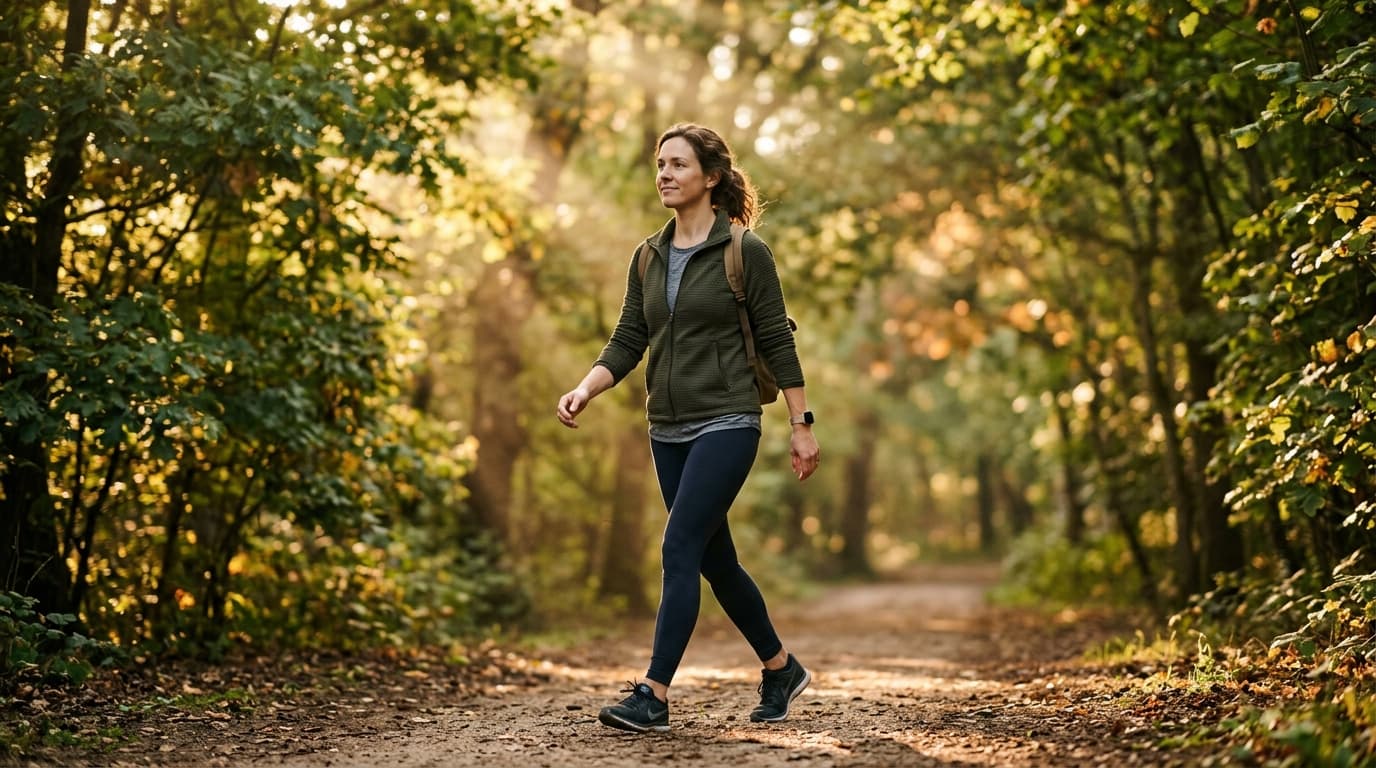
Working out on Ozempic or GLP-1 medication? A complete exercise guide covering resistance training, cardio, energy management, and realistic starting points.
Here is something that might sound counterintuitive: the medication that is helping you eat less is also making exercise more important, not less. When your body is losing weight, what it loses matters just as much as how much it loses. And exercise, particularly the right kind, is what tips the balance toward losing fat while keeping the muscle that protects your metabolism, your mobility, and your long-term health.
If you have been putting off exercise because you feel tired, uncertain about where to start, or worried about doing too much while your body is adjusting, this guide is for you. The bar is lower than you think, and the payoff is higher than you might expect.
Why Exercise Matters More on GLP-1 Medication
When you lose weight, your body loses a mixture of fat and lean mass (muscle, bone density, water). The STEP 1 trial found that approximately 40% of weight lost on semaglutide came from lean mass rather than fat. The SURMOUNT-1 trial for tirzepatide showed similar patterns.
Losing lean mass is concerning for several reasons:
- Metabolic slowdown: Muscle is metabolically active tissue. Every pound of muscle burns approximately 6-7 calories per day at rest. Losing it lowers your resting metabolic rate, making plateaus more likely and weight maintenance harder long-term.
- Functional decline: Muscle supports your joints, posture, balance, and ability to do everyday tasks. Losing it can increase injury risk and reduce quality of life.
- Regain risk: When weight is regained after medication discontinuation, it tends to come back as fat rather than muscle, resulting in a worse body composition than before. For more on protecting muscle mass on GLP-1s, we have a dedicated guide.
Exercise, especially resistance training, is the most effective intervention to preserve lean mass during weight loss. A 2024 meta-analysis in Obesity Reviews found that combining resistance exercise with caloric deficit preserved significantly more lean mass than caloric deficit alone.
Resistance Training: Your Highest Priority
If you can do only one type of exercise on GLP-1 medication, make it resistance training. This does not mean you need to become a weightlifter. It means challenging your muscles enough that they have a reason to stay.
How often: Two to three sessions per week, with at least one rest day between sessions for the same muscle groups. This frequency is supported by the American College of Sports Medicine and aligns with what clinical research shows is effective for muscle preservation during weight loss.
What counts:
- Bodyweight exercises: squats, push-ups (wall or floor), lunges, planks, step-ups
- Resistance bands: available at every fitness level and portable enough for home or travel
- Dumbbells or kettlebells: even a single pair of moderate-weight dumbbells enables a full-body routine
- Weight machines: if you have gym access, machines guide your movement and reduce the learning curve
How hard: Aim for sets where the last two to three repetitions feel challenging but doable. You do not need to push to absolute failure. A 2022 study in Sports Medicine found that training to within a few repetitions of failure produced similar muscle-building results to training to failure, with lower injury risk and less fatigue.
A simple starting routine:
- Squats: 3 sets of 10-12 repetitions
- Push-ups (wall, incline, or floor depending on your level): 3 sets of 8-12
- Dumbbell rows or resistance band rows: 3 sets of 10-12 per arm
- Lunges or step-ups: 3 sets of 10 per leg
- Plank hold: 3 sets for 20-30 seconds
This routine takes about 25-30 minutes and covers all major muscle groups. Start here. Build from here.
Cardio: Supportive, Not the Star
Cardiovascular exercise has genuine health benefits: improved heart health, better mood, enhanced insulin sensitivity, and stress reduction. But on GLP-1 medication, it should complement resistance training, not replace it.
Walking: The most accessible and underrated form of exercise. A 2023 study in the British Journal of Sports Medicine found that walking 8,000 to 10,000 steps per day was associated with a significant reduction in all-cause mortality. Walking after meals also supports digestion, which can help with the GI side effects of GLP-1 medication.
Moderate cardio: Activities like cycling, swimming, or brisk walking for 20-30 minutes, three to five days per week, support cardiovascular health without the high energy demands that can make recovery difficult when you are eating less.
High-intensity interval training (HIIT): Effective but demanding. If you are new to exercise or in the early months of GLP-1 treatment, HIIT may be too taxing. Consider building a base with walking and moderate cardio first, then adding intervals as your fitness improves and your body has adjusted to the medication.
Managing Energy
One of the most common barriers to exercise on GLP-1 medication is fatigue. You are eating less. Your body is adapting to a new metabolic environment. It is natural to feel lower energy, especially in the first two to three months.
Strategies for working with your energy, not against it:
- Time your workouts with your energy. Many people on GLP-1s find their energy is highest in the morning, before the appetite-suppressing effects of the medication are at their strongest. Experiment with timing to find what works for your body.
- Eat something before you train. Even if you are not hungry, a small protein-containing snack 30-60 minutes before exercise (a few bites of Greek yogurt, a small handful of nuts, half a protein bar) can prevent the lightheadedness that comes from training on an empty stomach.
- Adjust around injection days. If your energy dips for 24-48 hours after your weekly injection, plan rest days or light activity (walking, stretching) during that window and schedule your harder sessions for days when you feel better.
- Listen without judging. Some days you will have more energy than others. A shorter, lighter workout still counts. Movement of any kind is better than no movement.
Realistic Starting Points
If you are not currently exercising, here are honest, achievable starting points:
Week 1-2: Walk for 15-20 minutes on most days. That is it. Build the habit of putting on shoes and going outside. The duration and intensity will increase naturally.
Week 3-4: Add one resistance training session per week. Choose 3-4 exercises from the routine above. Do not worry about being perfect. Worry about showing up.
Month 2: Increase to two resistance sessions per week and continue daily walks. This is enough to make a meaningful difference in muscle preservation.
Month 3 and beyond: If you feel ready, add a third resistance session or increase walking to 30-45 minutes. Add variety if you want it. But two to three resistance sessions plus regular walking is a solid, sustainable foundation that most research supports.
The Identity Shift
Perhaps the most valuable thing exercise does on GLP-1 medication has nothing to do with calories or muscle. It is about identity.
When you show up to move your body, even on days when you would rather not, you are building evidence for a new story about who you are. Not "someone who is losing weight." But "someone who moves their body because it matters." That identity persists whether or not you are on medication. It persists through plateaus. It persists if you ever decide to stop the medication.
The habits you build now are not just about this moment. They are about who you are becoming.
When to Be Cautious
Exercise is safe for the vast majority of people on GLP-1 medication, but a few situations warrant extra care:
- Severe nausea or vomiting: If you are in the middle of a difficult dose adjustment and cannot keep food down, intense exercise is not appropriate. Walk gently instead and wait for side effects to stabilize.
- Dizziness or lightheadedness: This may signal dehydration or low blood sugar. Stop, hydrate, eat something, and reassess.
- Joint pain: If excess weight has affected your joints, low-impact activities (swimming, cycling, seated resistance exercises) may be better starting points than running or jumping.
- New to exercise entirely: Consider one session with a certified personal trainer to learn proper form on basic exercises. A single session is a worthy investment in long-term safety.
Key Takeaways
- Exercise matters more, not less, on GLP-1 medication because up to 40% of weight lost can be lean mass without intervention
- Resistance training 2-3 times per week is the single most important exercise for preserving muscle and metabolism
- Walking is the most accessible and underrated complement: aim for 8,000-10,000 steps daily
- Manage energy by timing workouts with your natural rhythms and eating a small protein snack before training
- Start where you are, not where you think you should be. A 15-minute walk is a valid beginning.
Fuel your workouts: Use the protein calculator to make sure you are eating enough to support both muscle preservation and exercise recovery.
Stay informed: Join the Gila newsletter for practical, evidence-based exercise and nutrition guidance tailored to life on GLP-1 medication.
Track your journey: Join the Gila pilot program to log workouts, energy levels, and body composition changes alongside your medication journey.
Related Articles

Moving Less on GLP-1: The Activity Drop Nobody Warns You About
A 2026 study using Fitbit data found people on GLP-1s moved less, not more — daily steps fell from 5,047 to 4,487. Here's why your body quietly slows down when you eat less, and the gentle way to protect muscle with movement and enough protein.
Read more →
Stopping and Restarting GLP-1 Is Normal — Here's What Holds the Loss
💡 **Your Journey, Your Habits!** New data from ENDO 2026 reveals that stopping and restarting GLP-1 medication is a common chapter for many, not a failure! This isn't about perfection, but about realizing that what truly anchors your weight loss through any pause are the powerful habits you build. So, let's use this window to focus on creating a sustainable foundation that outlasts any prescription!
Read more →
GLP-1 Persistence Statistics 2026: The Start-and-Stop Numbers, Honestly
GLP-1 persistence statistics for 2026, read honestly: how many people stop (about 4 in 10 in year one), how many restart (most of them), why they pause, and the behavior layer that separates regain from kept loss. Every figure linked to a primary source.
Read more →Ready to start your GLP-1 journey?
Gila helps you build lasting habits, understand your body, and stay on track. Join the pilot for free.
Join the Pilot