GLP-1 Weight Loss Plateau: Why It Happens and How to Break Through

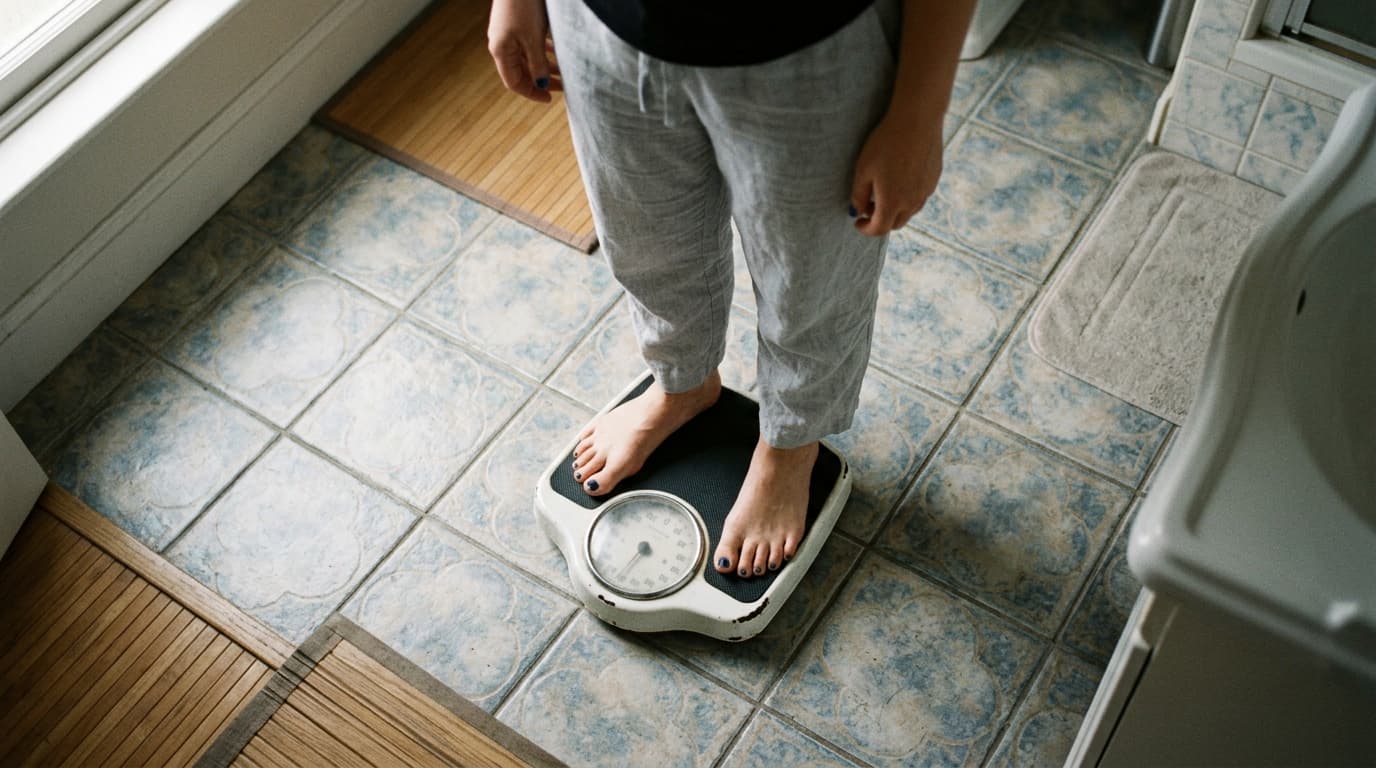
Hit a weight loss plateau on Ozempic, Wegovy, or Mounjaro? Metabolic adaptation is the most common cause. Here are 6 evidence-based strategies to restart your progress.
You have been doing everything right. Taking your medication consistently. Watching what you eat. Moving your body. And then the scale just stops. For days. Then weeks. The weight loss that felt so steady suddenly flatlines, and the voice in your head starts asking: is it over?
It is not. A plateau is not a wall. It is a landing on a staircase. And understanding why it happens changes everything about how you respond to it.
Why Plateaus Happen on GLP-1s
Your body is extraordinarily good at adaptation. As you lose weight, your resting metabolic rate decreases because there is less of you to fuel. A 2024 analysis in Nature Medicine found that metabolic adaptation accounts for a 10-15% reduction in daily energy expenditure after significant weight loss.
Additionally, GLP-1 receptor sensitivity can shift over time. Your body partially adapts to the medication, and the dramatic appetite suppression you felt initially may moderate.
What a Plateau Is Really Telling You
A plateau means your body has found a new equilibrium. It is not failure. It is your biology catching up to the changes you have already made. Reframing this moment matters: you have lost enough weight that your body is recalibrating. That is evidence of progress, not its absence.
Behavior-Based Strategies That Help
- Audit your protein intake. As portions naturally shrink, protein is often the first macronutrient to drop. Aim for 1.2-1.6g per kg of body weight — and if the stall is raising questions about muscle, the 2026 research on lean mass, protein and training covers what the body-composition trials found.
- Add resistance training. Building muscle increases your resting metabolic rate. Even two sessions per week makes a measurable difference.
- Review your sleep. Poor sleep disrupts leptin and ghrelin, hormones that interact directly with GLP-1 signaling.
- Track patterns, not just weight. Measurements, energy levels, how clothes fit, and strength gains all tell a more complete story than the scale alone.
The Plateau Is Part of the Journey
Every person who has sustained significant weight loss has navigated plateaus. They are not obstacles to your progress. They are chapters in it. What you do during a plateau — the habits you refine, the patience you practice, the identity you continue building — that is what separates temporary weight loss from lasting transformation.
Key Takeaways
- A plateau means your body found a new equilibrium — it is evidence of progress, not failure
- Audit your protein intake first — it is often the first macronutrient to drop as portions shrink
- Add 2 resistance training sessions per week to boost resting metabolic rate
- Track body measurements and energy levels, not just the scale
Get plateau-busting strategies delivered weekly. Subscribe to the Gila newsletter.
Build the habits that carry you through plateaus and beyond. Join the Gila pilot — founding members get their first year free.
Keep reading on Gila
- GLP-1 weight-loss statistics 2026: the numbers behind the medications
- GLP-1, muscle mass, and sarcopenia: the protein + training research
Keep reading on Gila
Related GLP-1 guides
- Ozempic stopped working? What to do next
- Prevent muscle loss on GLP-1s
- GLP-1 gastroparesis: what the research says
More from Gila (July 2026): A stall now is often a maintenance question later — what actually happens in maintenance after a GLP-1 covers what holds the loss. And for the structure part, Gila's free pilot is now open.
Keep reading on Gila
Related Articles

Moving Less on GLP-1: The Activity Drop Nobody Warns You About
A 2026 study using Fitbit data found people on GLP-1s moved less, not more — daily steps fell from 5,047 to 4,487. Here's why your body quietly slows down when you eat less, and the gentle way to protect muscle with movement and enough protein.
Read more →
Stopping and Restarting GLP-1 Is Normal — Here's What Holds the Loss
💡 **Your Journey, Your Habits!** New data from ENDO 2026 reveals that stopping and restarting GLP-1 medication is a common chapter for many, not a failure! This isn't about perfection, but about realizing that what truly anchors your weight loss through any pause are the powerful habits you build. So, let's use this window to focus on creating a sustainable foundation that outlasts any prescription!
Read more →
GLP-1 Persistence Statistics 2026: The Start-and-Stop Numbers, Honestly
GLP-1 persistence statistics for 2026, read honestly: how many people stop (about 4 in 10 in year one), how many restart (most of them), why they pause, and the behavior layer that separates regain from kept loss. Every figure linked to a primary source.
Read more →Ready to start your GLP-1 journey?
Gila helps you build lasting habits, understand your body, and stay on track. Join the pilot for free.
Join the Pilot