Why So Many People Quit GLP-1s: Causes and Solutions

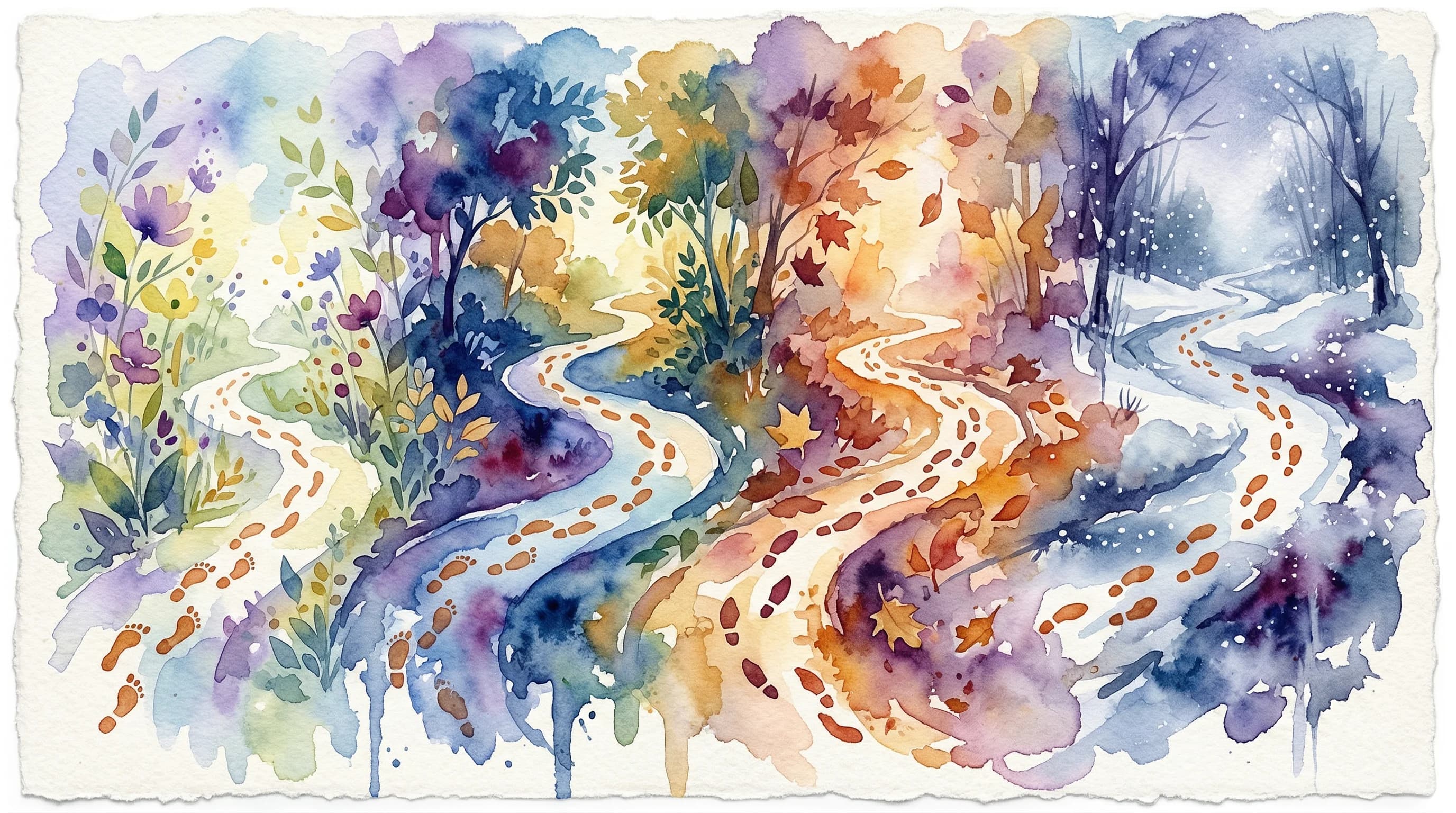
Persistence data shows many people stop GLP-1s within 12 months. Discover why people quit Ozempic and three actionable steps to stay on track.
The Number No One Talks About
If you're on a GLP-1 medication — semaglutide, tirzepatide, liraglutide, or any of the names that have become kitchen-table vocabulary — you've probably heard the success stories. The dramatic before-and-afters. The "it changed my life" testimonials. And those stories are real.
But there's a pattern that rarely makes it into the conversation: a large share of people who start a GLP-1 medication stop taking it within the first year.
That's not a fringe statistic. It comes from a large-scale study published in JAMA Network Open in 2024 by Wristberg and colleagues, who tracked GLP-1 persistence across thousands of patients. By the two-year mark, that number climbs to 72.2%. Nearly three out of four people walk away from their medication within 24 months.
Sit with that for a moment. These are medications that work — clinically, measurably, sometimes profoundly. And yet, more than half the people who start them don't continue.
This isn't a story about personal shortcomings. It's a story about a systemic gap — the distance between getting a prescription and actually being supported through everything that comes after.
Why People Stop
The reasons people discontinue GLP-1 medications are layered, personal, and rarely simple. But patterns emerge, and understanding them is the first step toward addressing them.
Side effects that wear you down
About 28.2% of people who stop their GLP-1 cite gastrointestinal side effects as their primary reason. Nausea, constipation, fatigue, appetite changes that feel unsettling rather than freeing. For some, the side effects are worst in the early weeks and then ease. For others, they persist — and the daily discomfort starts to outweigh the long-term promise.
What often goes unspoken is how isolating these side effects can be. You're at a dinner with friends, pushing food around your plate, feeling nauseous and trying to act normal. You're exhausted at 2 p.m. but can't explain why. The medication is working, but your body is also adjusting to something enormous — and there's no playbook for how to navigate that in everyday life.
Cost and access barriers
Even when a medication is working, the path to keeping it isn't always clear. Insurance coverage can change mid-treatment. Prior authorizations expire and need to be refiled. Supply shortages — which have affected GLP-1 medications repeatedly over the past two years — can leave you without your dose for weeks.
Each of these disruptions creates a gap. And each gap creates an off-ramp. When your prescription becomes a monthly negotiation with insurance companies, pharmacies, and your own bank account, the friction compounds. The medication didn't fail. The system around it did.
The absence of behavioral support
Here's the reality most clinics don't talk about: a GLP-1 prescription typically comes with a 15-minute appointment, a titration schedule, and a follow-up in three months. That's it.
No guidance on how to eat when your appetite vanishes. No conversation about what to do when your relationship with food fundamentally shifts. No support for the emotional experience of watching your body change faster than your self-image can keep up.
The medical system is designed to prescribe. It is not designed to support the daily, lived experience of being on these medications. And that gap — between the prescription and the person — is where most people fall through.
Identity confusion
This one is harder to quantify but no less real. When your body changes rapidly — sometimes losing 15-20% of your body weight in months — the psychological impact is significant. People describe looking in the mirror and not recognizing themselves. They feel unmoored from the identity they've built over decades.
"I wanted this," one person wrote in a support forum. "So why do I feel like I'm grieving?"
Rapid physical change can surface unresolved relationships with food, with your body, with how you've been perceived by others. The medication shifts the physical reality, but nobody prepares you for the emotional one. And when that dissonance gets loud enough, stopping the medication can feel like returning to something familiar — even if familiar wasn't working either.
The motivation cliff at months 4-6
There's a predictable rhythm to any new health intervention. The first few weeks are charged with excitement. You're losing weight. You're feeling different. Every change feels like progress.
Then, somewhere around month four to six, the trajectory flattens. The rapid changes slow. A plateau arrives. The novelty wears off, and what remains is the daily reality: taking a medication, managing side effects, adjusting your life around something that now feels routine instead of transformative.
This is the motivation cliff — the point where the emotional fuel that got you started runs out, and nothing has been built to replace it. It's not that you've failed. It's that excitement was never going to be enough to carry you long-term. Something more durable needs to take its place.
The Missing Layer
If you look at the landscape of GLP-1 support tools — apps, trackers, telehealth platforms — most of them do roughly the same thing. They count your doses. They log your meals. They track your weight. They give you data.
And data is useful. But data doesn't hold your hand at month five when you're questioning whether any of this is worth it. Data doesn't help you rebuild your identity when your body no longer matches the story you've told about yourself. Data doesn't sit with you in the discomfort of change.
Most of these tools are designed to watch your journey. Very few are designed to actually support it.
The gap isn't information. It's support. It's the difference between knowing what you should do and having something in your corner that helps you actually do it — especially on the days when you don't want to.
Think about what the people who discontinue actually needed. They didn't need another dashboard. They needed someone — or something — to help them navigate the emotional landscape of change. To help them build the daily behaviors that make a medication sustainable. To help them find their footing when the ground shifts beneath them.
That's the missing layer. Not more tracking. Not more information. But genuine behavioral and emotional support that meets you where you are, every single day.
Reframing Persistence
There's a common narrative that medication persistence is about staying committed. About being "strong enough" to push through. But that framing puts all the weight on the individual and ignores everything we know about how humans actually sustain behavior.
Persistence isn't a character trait. It's an outcome — the result of environment, identity, and daily micro-habits working together.
James Clear, in Atomic Habits, describes a concept called habit stacking: attaching a new behavior to an existing one. "After I do [current habit], I will do [new habit]." It works because it borrows the momentum of something you already do automatically, rather than relying on motivation to generate action from scratch.
Clear also writes about identity-based habits — the idea that lasting change happens not when you set a goal, but when you begin to see yourself as the kind of person who does the thing. Not "I want to lose weight" but "I'm someone who takes care of my body." The shift is subtle but profound. When your habits align with your sense of who you are, they stop feeling like obligations and start feeling like expressions of self.
Charles Duhigg's work on the cue-routine-reward loop adds another dimension. Every habit exists within a cycle: something triggers it, you perform the behavior, and you receive a reward. When we understand this loop, we can design our environment to make the right behaviors easier and more rewarding — rather than relying on raw determination to override the wrong ones.
The medication works. The habits are what make it last.
This is not about adding more to your plate. It's about recognizing that the factors which determine whether you're still on your medication at month twelve have less to do with the drug itself and more to do with what surrounds it — the routines you build, the support you have, the story you tell yourself about who you're becoming.
Persistence isn't something you summon. It's something you build, one small action at a time. And the good news is that building it is far more accessible than most people realize.
What You Can Do Today
You don't need a complete overhaul. You don't need a new plan or a perfect system. You need one small, concrete action that creates a foothold — something you can do today that makes tomorrow slightly easier. Here are three.
1. Start a 2-minute evening check-in
Before bed tonight, take two minutes to answer one question: What did I notice about my body today?
That's it. Not "What did I eat?" Not "Did I hit my goals?" Just: what did you notice?
Maybe you noticed your energy dipped after lunch. Maybe you realized you weren't hungry at dinner and felt strange about it. Maybe you noticed your jeans fit differently, and you're not sure how you feel about that.
This practice does two things. First, it builds the habit of paying attention — to your body, your energy, your emotional state — in a way that's curious rather than judgmental. Second, it creates a record. Not a data log, but a story. Over weeks, you'll start to see patterns. You'll notice what supports you and what drains you. And that awareness becomes the foundation for every other positive change.
You can write it in a journal, type it into your phone, or even just say it aloud. The format doesn't matter. The consistency does. Two minutes. Every night. That's the whole thing.
If you want to take this further, building habits that outlast your prescription starts with exactly these kinds of small, stackable practices.
2. Build one anchor habit around your medication routine
If you take a weekly injection, that day already has a built-in anchor point. Use it.
Link your medication day to a self-care ritual — something that feels good and is entirely for you. Maybe it's a specific breakfast you love. A walk in a place that calms you. A playlist you only listen to on that day. A warm bath that evening. A phone call with someone who gets it.
The idea is simple: your medication day becomes more than a medical task. It becomes a day that's yours. A day you associate with care, not obligation. Over time, this transforms the emotional valence of the entire routine. Instead of "I have to take my shot today," it becomes "Today is my day."
This is habit stacking in action. You're not adding a burden — you're wrapping the necessary behavior in something meaningful. And that meaning is what sustains it when the novelty fades.
3. Find your people
The GLP-1 journey is too layered, too personal, and too unpredictable to navigate alone. Finding others who understand what you're going through — not theoretically, but from lived experience — can make the difference between pushing through a rough month and quietly stepping away.
This might be an online community. A support group. A friend who's on the same medication. Even a dedicated space within an app where people share what's actually happening, not just the highlight reel.
What matters is that you have at least one space where you can say, "I'm having a hard week and I don't know why," and be met with understanding rather than advice. Where someone else can say, "That happened to me too," and suddenly the weight of it lifts, just a little.
Community isn't a nice-to-have. It's infrastructure. It's what catches you when the motivation cliff arrives. If you're looking for a starting point, reading what others on this journey have shared can remind you that the things you're feeling aren't unusual — and that you don't have to figure all of this out on your own.
The Road Forward
That statistic is not a verdict. It's a signal — pointing to a gap that's been there all along, between the prescription and the person. Between the clinical promise and the daily reality.
If you're on a GLP-1 and you've had weeks where you questioned everything — whether it's worth the side effects, whether you can afford it next month, whether the person looking back at you in the mirror is really you — know this: those questions are not signs that something is wrong with you. They're signs that you needed more support than you were given.
The medication is one part of the equation. The habits, the routines, the community, the daily act of paying attention to yourself with kindness — that's the rest of it. And the rest of it is what makes the difference between a prescription you tried once and a genuine, sustained change in how you live.
You don't have to figure it out all at once. Start with two minutes tonight. One anchor habit this week. One conversation with someone who understands.
That's enough. That's more than enough. That's how it begins.
Key Takeaways
- Side effects (28.2%), cost/access, and lack of support are the top three reasons people stop GLP-1 medication
- Having a structured support system dramatically improves persistence rates
- Identity confusion during rapid body change is real and under-discussed — it is not vanity, it is psychology
- The people who persist are not the ones with no problems — they are the ones with better support
Stay informed, stay supported, stay on track. Subscribe to the Gila newsletter.
Gila is the persistence companion that helps you stay when it gets hard. Join the pilot — founding members get their first year free.
Related Articles

Traveling with GLP-1: Pens, Flights and Your Routine
A trip changes where your GLP-1 pen lives and what your day looks like. This piece sets out what each US label says about keeping pens cold, how TSA, UK and CDC guidance handle medication in transit, why travel loosens routines, and how to rebuild yours in the first three days home.
Read more →
Eating Out on GLP-1: Restaurants and Social Meals
A smaller appetite meets big restaurant portions and a table of people who love you. This piece covers why eating with friends pulls harder, how to decide before you go, how to order down or share, and short lines for when someone offers just one more.
Read more →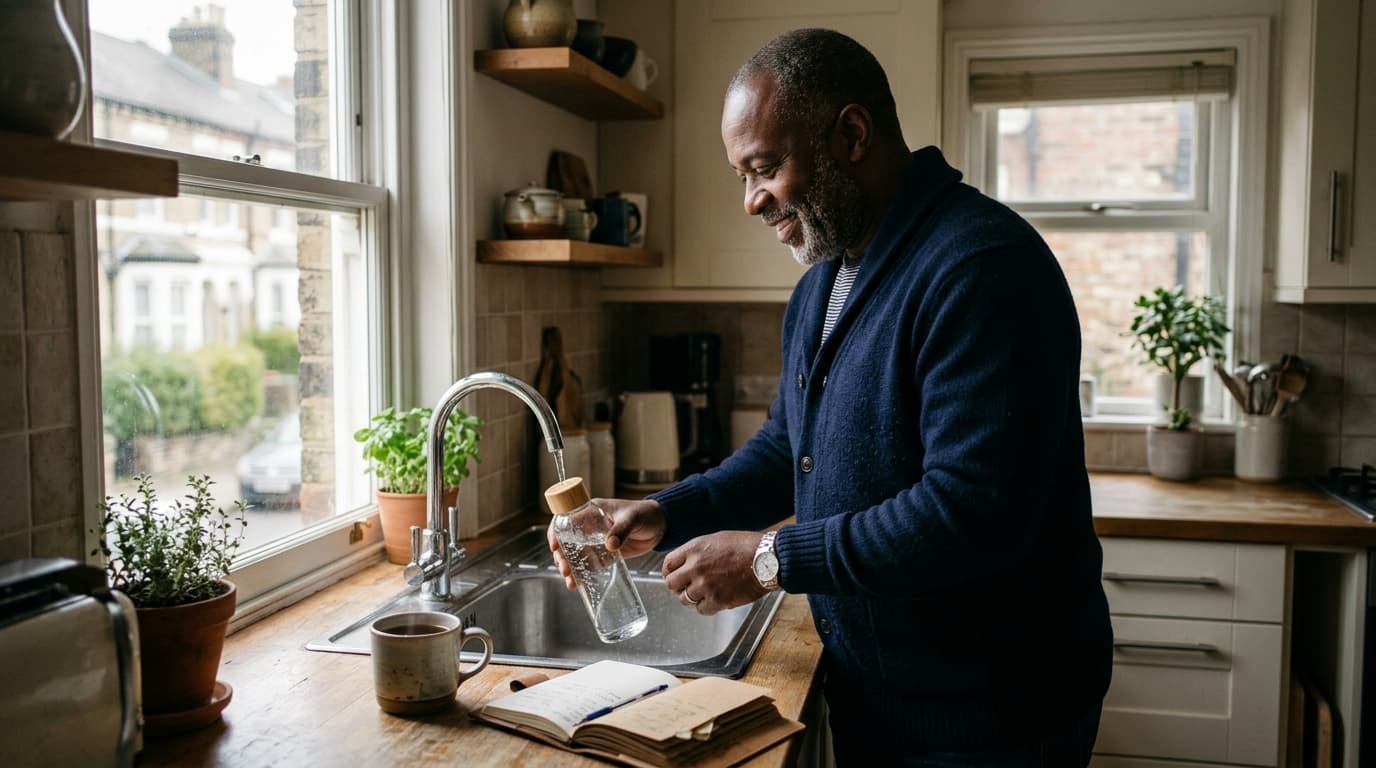
GLP-1 Hydration: Why Drinking Enough Gets Harder
On GLP-1 treatment, fluids can slip two ways: a smaller appetite means less water from food, and nausea, vomiting or diarrhea take fluid out. This piece quotes what the US and EU labels say about dehydration, gives EFSA's general adult reference, and sets out simple if-then routines to keep drinking.
Read more →Ready to start your GLP-1 journey?
Gila helps you build lasting habits, understand your body, and stay on track. Join the pilot for free.
Join the Pilot