Ozempic Face: What It Is and What You Can Do

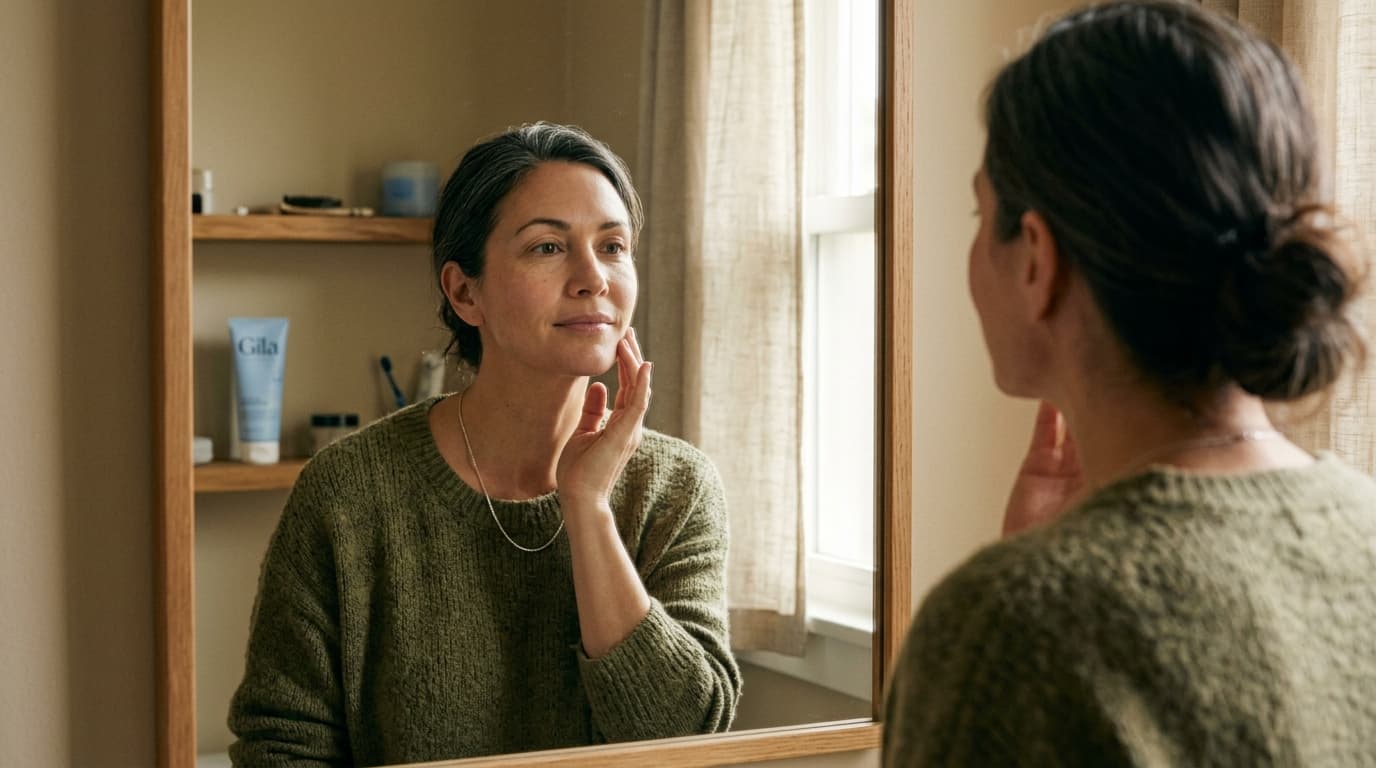
Ozempic face explained: what causes facial volume loss on GLP-1 medications, why rate of weight loss matters, and practical steps to protect your appearance.
You are a few months into your GLP-1 journey. The scale has moved. Your clothes fit differently. And then, one morning, you catch your reflection and notice something unexpected: your face looks different. Not just thinner. Older, somehow. More hollow. The person looking back at you does not quite match the person you expected to see.
If this resonates, you have encountered what the internet has labeled "Ozempic face." The term is reductive and a bit unfair to both you and the medication, but the experience it describes is real. Let us talk about what is actually happening, why it happens, and what you can do about it.
What Is Actually Happening
"Ozempic face" is not a side effect of semaglutide or tirzepatide specifically. It is a consequence of significant weight loss from any cause. The face loses subcutaneous fat, the soft padding beneath the skin that gives your cheeks, temples, and under-eye area their fullness. When this fat diminishes, the skin, which may have less elasticity depending on your age and genetics, can appear looser, more creased, or more hollow.
Dermatologists have observed this phenomenon for decades in patients who lose substantial weight through any method, surgery, lifestyle changes, or medication. A 2023 commentary in the Journal of the American Academy of Dermatology noted that the recent attention to facial volume loss is primarily a function of how many people are now losing significant weight on GLP-1 medications, not a unique property of the drugs themselves.
The face is simply one of the most visible areas where fat loss shows, because we see our faces constantly and others see them first.
Why Rate of Loss Matters
One factor that can make facial changes more noticeable on GLP-1 medications is the pace of weight loss. The STEP 1 trial showed an average of 14.9% body weight loss over 68 weeks, and SURMOUNT-1 showed up to 22.5% with tirzepatide. For some people, particularly those who respond strongly to the medication, significant weight loss can happen relatively quickly.
Rapid weight loss gives your skin less time to adapt. Collagen and elastin, the proteins that give skin its structure and bounce-back capacity, take time to remodel. When fat volume decreases faster than skin can contract, the result is a more pronounced change in facial appearance.
This is one of the reasons your prescriber starts you on a low dose and titrates gradually. Slower, steadier weight loss is gentler on your entire body, including your face. If you are in the early months of treatment, know that the titration schedule exists partly for this reason.
Who Is More Affected
Several factors influence how noticeable facial volume changes may be:
- Age: After 40, collagen production naturally declines by approximately 1% per year. Skin has less capacity to contract after fat loss.
- Total weight loss: People who lose more than 15-20% of their body weight are more likely to notice facial changes than those with modest losses.
- Genetics: Skin elasticity varies significantly between individuals. Some people's skin contracts readily; others' does not.
- Sun exposure history: Years of UV exposure damages collagen and elastin, reducing skin's ability to adapt to volume changes.
- Smoking history: Smoking accelerates collagen breakdown, compounding the effect.
What You Can Do
Protect Your Collagen
You cannot stop collagen from declining with age, but you can avoid accelerating the loss:
- Sunscreen daily. UV radiation is the single largest external driver of collagen breakdown. A broad-spectrum SPF 30 or higher, applied to your face every morning, is the most impactful thing you can do for your skin's long-term resilience.
- Retinoids. Prescription retinoids (tretinoin) or over-the-counter retinol stimulate collagen production. If you are not already using one, a dermatologist can recommend the right strength for your skin.
- Vitamin C serum. Topical vitamin C supports collagen synthesis and provides antioxidant protection. Apply in the morning before sunscreen.
Nourish from the Inside
Your body needs specific nutrients to build and maintain collagen. When your appetite is reduced on GLP-1 medication, prioritizing these nutrients becomes especially important:
- Protein: Collagen is a protein, and your body needs amino acids (particularly glycine, proline, and hydroxyproline) to produce it. Adequate protein intake on GLP-1 medication supports both muscle preservation and skin health.
- Vitamin C: Essential for collagen synthesis. Citrus fruits, bell peppers, strawberries, and broccoli are rich sources.
- Zinc: Supports skin repair and collagen production. Found in meat, shellfish, legumes, and seeds.
- Omega-3 fatty acids: Support skin barrier function and hydration. Fatty fish, walnuts, and flaxseed are good sources.
Stay Hydrated
Dehydration makes skin look thinner and more hollow. Many people on GLP-1 medications do not drink enough water because their overall intake cues are dampened. Adequate hydration plumps skin cells and helps maintain a healthier appearance.
Facial Exercises
While the evidence is limited, a small study published in JAMA Dermatology (2018) found that 30 minutes of daily facial exercises over 20 weeks led to fuller upper and lower cheeks in middle-aged women. The researchers theorized that strengthening underlying facial muscles can partially compensate for fat volume loss.
These exercises are free, have no side effects, and take only a few minutes. Even if the effects are modest, they may contribute to maintaining facial tone during weight loss.
Dermatological Options
If facial volume loss is significant and bothering you, a board-certified dermatologist or plastic surgeon can discuss:
- Hyaluronic acid fillers: Temporary volume restoration in the cheeks, temples, and under-eye area. Effects last 6 to 18 months depending on the product.
- Biostimulatory fillers: Products like Sculptra stimulate your body's own collagen production over several months, with effects lasting up to two years.
- Microneedling and radiofrequency: These treatments stimulate collagen remodeling and can improve skin tightness over time.
These are not necessary for everyone, and they carry their own costs and considerations. But they exist as options if you want them.
Reframing the Conversation
The term "Ozempic face" carries an implicit judgment, as if the facial change is something to hide or a sign that you have done something wrong. It is neither. Your face is changing because your body is changing. That change represents progress toward better health.
It is also completely valid to feel complicated about it. You can celebrate your health improvements and simultaneously feel uneasy about unexpected changes in your appearance. Both things can be true. If the emotional impact feels heavy, our guide to mood changes and mental health on GLP-1s may resonate.
Your face is yours. How you feel about its changes is yours. And whatever you decide to do about it, or not do, is a valid choice.
Key Takeaways
- "Ozempic face" is facial volume loss from significant weight loss, not a unique side effect of any specific medication
- Rapid weight loss gives skin less time to adapt; gradual titration and steady progress help minimize changes
- Daily sunscreen, retinoids, adequate protein, and hydration protect collagen and support skin health
- Dermatological options like fillers and biostimulatory treatments exist if you want additional support
- Feeling complicated about appearance changes is normal and valid, regardless of what you choose to do
Nourish your skin from within: Use the protein calculator to make sure you are getting enough amino acids for collagen production.
Stay informed: Join the Gila newsletter for practical guidance on navigating the less-discussed aspects of your GLP-1 journey.
Track your journey: Join the Gila pilot program to log your progress and notice the changes that matter most to you.
Related Articles

Moving Less on GLP-1: The Activity Drop Nobody Warns You About
A 2026 study using Fitbit data found people on GLP-1s moved less, not more — daily steps fell from 5,047 to 4,487. Here's why your body quietly slows down when you eat less, and the gentle way to protect muscle with movement and enough protein.
Read more →
Stopping and Restarting GLP-1 Is Normal — Here's What Holds the Loss
💡 **Your Journey, Your Habits!** New data from ENDO 2026 reveals that stopping and restarting GLP-1 medication is a common chapter for many, not a failure! This isn't about perfection, but about realizing that what truly anchors your weight loss through any pause are the powerful habits you build. So, let's use this window to focus on creating a sustainable foundation that outlasts any prescription!
Read more →
GLP-1 Persistence Statistics 2026: The Start-and-Stop Numbers, Honestly
GLP-1 persistence statistics for 2026, read honestly: how many people stop (about 4 in 10 in year one), how many restart (most of them), why they pause, and the behavior layer that separates regain from kept loss. Every figure linked to a primary source.
Read more →Ready to start your GLP-1 journey?
Gila helps you build lasting habits, understand your body, and stay on track. Join the pilot for free.
Join the Pilot