Why We Built a Companion, Not Another Tracker — Gila's Free Pilot Is Open


✨ **Your Journey Just Got Smarter!** Tired of juggling multiple apps for your GLP-1 journey? Our new Gila companion app is designed to bring everything into one smart place, helping you move beyond basic tracking to build the sustainable habits crucial for lasting success. This is about empowering *you* to truly keep what the medication starts, making your long-term health goals a reality.
By Sezen Soykut, Founder of Gila
TL;DR: I tried more than 30 GLP-1 apps before building Gila and still needed five of them to cover one week, none talking to each other. Only about one in seven people are still on their GLP-1 at two years. Gila is built for that gap, not the logging. Our free pilot is open now on iPhone.
Before I wrote a line of Gila, I filled my phone with GLP-1 apps. I stopped counting somewhere past thirty. Most of them looked the same — a syringe icon, a weight chart, a food log, a paywall by the third screen.
By the end of an ordinary Tuesday I'd used five separate apps: one to log the dose, one to log what I ate, one to log how I felt, one for the number on the scale, and one that at least tried to string a couple of those together. None of them knew that Tuesday's nausea traced back to Monday's dose. None of them noticed that skipping the evening log three nights running wasn't a data gap — it was a habit quietly forming, in the wrong direction.
This isn't a knock on any single app; most of them do their one job well. If you want the full rundown of who does what, we already wrote that comparison so you don't have to build your own five-app stack by trial and error. What struck me wasn't any one app's gaps — it was that thirty-plus of them had converged on the same idea. Log it. Chart it. Remind you tomorrow. Watch the journey happen. Nobody was building for what happens after the logging, for the stretch where the medication's effect quiets down and the only thing standing between you and regain is whatever you built while it was working.
What trackers watch, a companion helps you keep
I'm a behavioral coach. My co-founder is a professor of general surgery who has spent his career in obesity and metabolic surgery. Between us, we've sat with a lot of people who started a GLP-1 with real hope — and we've read what the data says happens next. By the two-year mark, only about one in seven people are still on their medication (AJMC / Prime Therapeutics). Not because the medication stopped working. Because the second year is usually where the structure around it quietly gives out — cost, side effects, a stalled plateau, or just routines nobody reinforced.
A tracker can chart that collapse beautifully. It can't stop it. That gap, between watching the decline and doing something about it, is the reason Gila exists. Gila helps you keep what the medication starts.
What we actually built
Gila isn't meant to be a sixth app on top of the five. It's meant to replace them. Food gets logged by photo. Doses — pill or shot, whichever you're on — sit next to your side effects and mood in one narrative journal instead of four disconnected charts. On a rough day, that's one app open instead of three.
The part I'm proudest of is the habit engine. Most trackers I tried had, at best, a habit checkbox — log a walk, tick a box, repeat tomorrow. Ours reads your actual data — doses, side effects, mood, food — and generates specific, stage-aware micro-habits for exactly where you are. Week two, when nausea is the whole story, gets a different habit than month six, when a stalled plateau is the whole story. Everyone added a habit checkbox. We built the engine underneath it.
We also treat what this community calls "food noise" — the mental volume of thinking about food — as a real, ongoing signal instead of a footnote. Gila tracks it alongside your doses and habits so you can watch it as a pattern over weeks: is it actually going quiet, and does it creep back on the days you'd expect. We won't pretend a single number captures that honestly. What we can do is show you the trend and let you feel it change. If you want a starting read on where you stand today, there's a short food noise assessment you can take in a couple of minutes.
Why the name
Gila is a small lizard, and its saliva is where this entire drug class began. In 1990, VA researcher Dr. John Eng identified a hormone in the Gila monster's saliva that became exendin-4 — the chemical ancestor of the GLP-1 medications people take today. We didn't choose the name for the reptile. We chose it for the lineage: something quiet and overlooked turned out to hold the mechanism for lasting change. That's the bet we're making on habits, too.
The free pilot is open
We're opening Gila to a small group first, on iPhone, through TestFlight. Android is a waitlist for now — we'd rather get the iPhone experience right before splitting our attention. Every pilot member gets a full year of Gila free — and the year starts the day we launch publicly on the App Store, so nothing you use during the pilot counts against it. We're capping the pilot at 200 people, because that's how many we can genuinely listen to.
This isn't a polished product fishing for five-star reviews. It's a pilot, and I mean that literally — what you tell us in the first few weeks shapes what we build next. If something's missing, confusing, or just doesn't fit your journey, I want to hear it directly at support@gila.coach, not have it sit in a backlog nobody reads.
If you're tired of holding your journey together across five apps, sign up for the free pilot.
Key Takeaways
- Trackers document what's happening; a companion is built to change what happens next.
- Only about 1 in 7 GLP-1 users are still on their medication at two years — the second year is where most journeys break (AJMC / Prime Therapeutics).
- Gila replaces the five-app stack: doses (pill or shot), photo food logging, and side effects/mood in one narrative journal.
- The habit engine reads your real data and generates stage-aware micro-habits — not a checkbox.
- Food Noise is tracked as an ongoing pattern over weeks, not reduced to a single number.
- The name traces to exendin-4, a hormone discovered in Gila monster saliva in 1990 by VA researcher Dr. John Eng.
- The free pilot is open now on iPhone via TestFlight (Android is on the waitlist). Every pilot member gets a year of Gila free, starting at our public launch.
Want more of this — honest GLP-1 app comparisons, what we're building, and what the research actually says — in your inbox? Subscribe to the Gila newsletter.
Related Articles
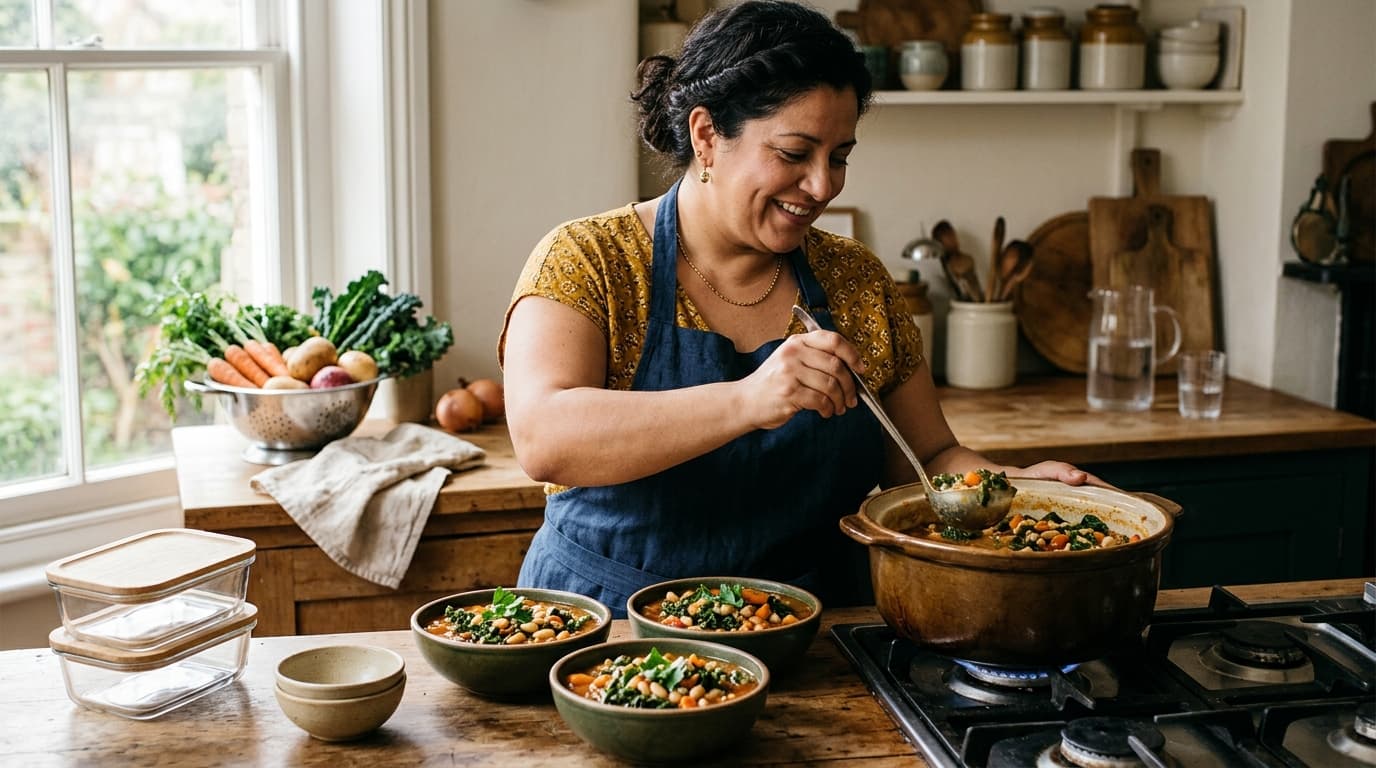
Shopping and Cooking on GLP-1: When the Household Still Eats
You eat a fraction of what you used to; nobody you live with has changed. In a US household panel, grocery spending fell 5.3% within six months. In a 505-person US survey, a quarter agreed they waste more food. The fix is one meal served two sizes - never a separate plate, never a cleared one.
Read more →
GLP-1 and Sleep: What the Labels and the Studies Actually Say
Insomnia is listed as a common side effect on one GLP-1 label — liraglutide, mainly in the first three months — and on none of the weekly medicines. This piece reports what the product information and two small uncontrolled studies show, why none of it proves cause, and the sleep routine you can control and log.
Read more →
Hunger Between Doses: What Is Known, and What Nobody Has Measured
The half-lives are label-established; the day-by-day story is not. We ran 18 literature searches and found no study measuring hunger, food noise or energy across the days between weekly doses. What the labels do and do not say, why people differ, and how to keep a log that shows your own week.
Read more →Ready to start your GLP-1 journey?
Gila helps you build lasting habits, understand your body, and stay on track. Join the pilot for free.
Join the Pilot