For the First Time in a Decade, the Curve Is Bending

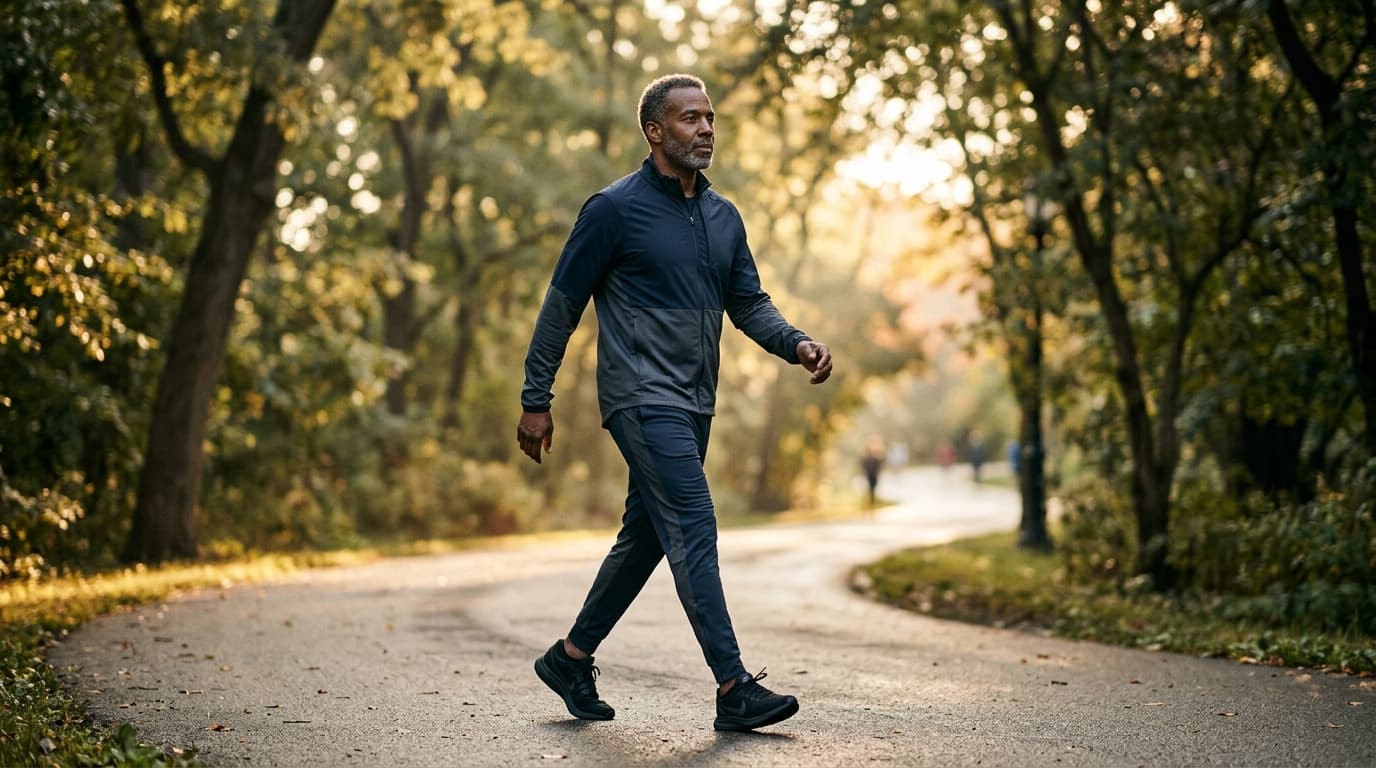
Gallup says the U.S. adult obesity rate eased from a 2022 record (39.9%) to 36.4% this year, alongside record GLP-1 use. It's self-reported, not clinically measured — and the government's own measured survey just found record obesity in teenagers. Early signal, not a verdict. What holds it is what people build, not the prescription.
By Matt
TL;DR: Gallup says the U.S. adult obesity rate eased from a 2022 record (39.9%) to 36.4% this year, alongside record GLP-1 use. It's self-reported, not clinically measured — and the government's own measured survey just found record obesity in teenagers. Early signal, not a verdict. What holds it is what people build, not the prescription.
The number, and the honest version of it. On July 7, Gallup reported that the U.S. adult obesity rate has "gradually dropped to 36.4% thus far in 2026," down from a record high of 39.9% in 2022 — what Gallup itself calls a "statistically meaningful decline" (Gallup, July 7, 2026). It arrives alongside a second number: the share of adults currently taking a GLP-1 medication has gone from 3% in 2024 to 11% today, with awareness at a record 91%. Read together, that's the story everyone ran with this month (U.S. News, July 7, 2026).
Here's what that number actually is, and isn't. Gallup's obesity figure comes from a web-based panel asking people to report their own height and weight — not a clinical exam. Gallup says so itself: a "'vanity effect' in how respondents present themselves may explain why Gallup's obesity estimates are typically somewhat lower than those obtained from studies that use randomized clinical measurements." Because the method stays consistent wave to wave, the trend is still real — just not the same kind of number as a physical measurement. The government's own measured survey (NHANES, physical exams, not self-report) tells a more complicated story: adults eased only "slightly," 42.8% to 40.3%, across a window that runs through August 2023 — mostly before the current medication surge — and in that same release, teenagers hit a record high, 21.1%, up from 19.3% (CDC/NHANES, reported Feb. 2026). Two real surveys, two different instruments, not fully overlapping in time. That's not a reason to dismiss the Gallup number. It's the actual shape of an early signal, not a settled one.
Why now, honestly. No single factor explains a population-level number moving. GLP-1 use nearly quadrupled in two years, and Medicare's new GLP-1 Bridge opened wider access on July 1. The sharpest obesity declines cluster in ages 40 to 64 — down 4.3 to 5.0 points in Gallup's last age breakdown — which is also where medication use runs highest; adults under 30 and over 65 barely moved (Gallup, Oct. 2025). That's a pattern Gallup is careful to describe as tracking together, not proof of cause. Part of the increase is also coming from lower-cost compounded versions, not brand-name prescriptions alone — worth tracking, not judging. Medication reach, a policy shift, and which age groups got there first — stacked together, not one clean story.
What decides if it holds. The medication is the part that opened a door for a lot of people at the same time. Whether a population number holds for years is a different question — a structure question, not a chemistry one — and real-world research already has an answer at the individual level. In a 7,938-patient Cleveland Clinic study, people who kept some structure in place after stopping a GLP-1 — restarting, switching, or adding lifestyle support with a clinician — regained just 0.5% of body weight on average after a year (Cleveland Clinic, 2026). Two-year persistence on these medications still sits around 15% overall (Prime Therapeutics) — the second year, not the first, is where most plans actually break. A national average bending is real news. It isn't a guarantee for any one person's chart.
If you're mid-journey. You're statistically part of this number now, if you're on a GLP-1 — worth sitting with for a second, not rushing past. But the population curve bending doesn't tell you anything about whether yours holds. Who you become while the medication is working is still yours to build, one routine at a time — a question about structure, not chemistry.
Key Takeaways
- Gallup: U.S. adult obesity eased to 36.4% in 2026 from a 2022 record of 39.9% — its own word is "statistically meaningful," not confirmed or final.
- The figure is self-reported height and weight, not a clinical exam. Gallup's own note says self-report runs lower than measured BMI, though the trend stays consistent wave to wave.
- The government's measured survey (NHANES) shows adults easing only "slightly" (42.8% to 40.3%) through August 2023 — before most of the medication surge — while teen obesity hit a record high (21.1%) in the same release.
- GLP-1 use went from 3% to 11% of adults in two years; the sharpest obesity declines cluster in the same 40–64 age bands where medication use runs highest.
- Two-year persistence on GLP-1s still sits near 15%. People who keep structure in place after stopping regain far less than trial-conditions numbers suggest.
- One good national data point is reason for quiet hope, not a verdict — it says nothing about any one person's outcome.
Sources
- Gallup, "In U.S., GLP-1 Usage Reaches New High", July 7, 2026
- Gallup, "Obesity Rate Declining in U.S.", Oct. 28, 2025
- U.S. News & World Report, "U.S. Obesity Rate Drops as Use of GLP-1 Weight Loss Drugs Surges", July 7, 2026
- CDC/NCHS (NHANES), "Obesity and Severe Obesity Prevalence in Adults: United States, August 2021–August 2023", NCHS Data Brief No. 508
- CDC/NHANES youth obesity findings (ages 2–19), reported Feb. 2026 (AHA News summary)
- Cleveland Clinic, real-world GLP-1 discontinuation study, March 2026
- Prime Therapeutics, 2-year GLP-1 persistence analysis
Keep reading:
- Want the deeper research on what maintenance actually takes? Keeping weight off after GLP-1 covers the Cleveland Clinic data in full.
- Want the fuller numbers on where people are in the journey? GLP-1 persistence statistics, 2026 rounds up the research in one place.
Not sure your own structure is already there? The habit readiness assessment takes two minutes and tells you.
We track studies like these before headlines simplify them — subscribe to the newsletter for the real numbers.
Gila is in its free pilot right now. Sign up for the free pilot and bring the structure with you, whatever your dose looks like.
This article covers survey research and public health data — not medical advice. Gila doesn't diagnose, prescribe, or recommend changes to your medication. Any question about starting, switching, or stopping treatment belongs with your clinician.
Related Articles

Traveling with GLP-1: Pens, Flights and Your Routine
A trip changes where your GLP-1 pen lives and what your day looks like. This piece sets out what each US label says about keeping pens cold, how TSA, UK and CDC guidance handle medication in transit, why travel loosens routines, and how to rebuild yours in the first three days home.
Read more →
Eating Out on GLP-1: Restaurants and Social Meals
A smaller appetite meets big restaurant portions and a table of people who love you. This piece covers why eating with friends pulls harder, how to decide before you go, how to order down or share, and short lines for when someone offers just one more.
Read more →
GLP-1 Hydration: Why Drinking Enough Gets Harder
On GLP-1 treatment, fluids can slip two ways: a smaller appetite means less water from food, and nausea, vomiting or diarrhea take fluid out. This piece quotes what the US and EU labels say about dehydration, gives EFSA's general adult reference, and sets out simple if-then routines to keep drinking.
Read more →Ready to start your GLP-1 journey?
Gila helps you build lasting habits, understand your body, and stay on track. Join the pilot for free.
Join the Pilot