ArticleGreatist · February 24, 2026
New Study Says Limiting Bedtime Eating Boosts Overall Health
AI Summary
❤️ **Nighttime Nudge!** A new study spotlighted by Greatist shows that finishing your last meal three hours before bed is a game-changer for our health, improving blood pressure, heart rate, and glucose levels! This simple habit can seriously boost your metabolic health and support your weight loss journey, proving that *when* you eat can be as important as *what* you eat. Let's make this small shift tonight for big health wins!
# New Research Shows Why Eating Before Bed May Not Be Wise
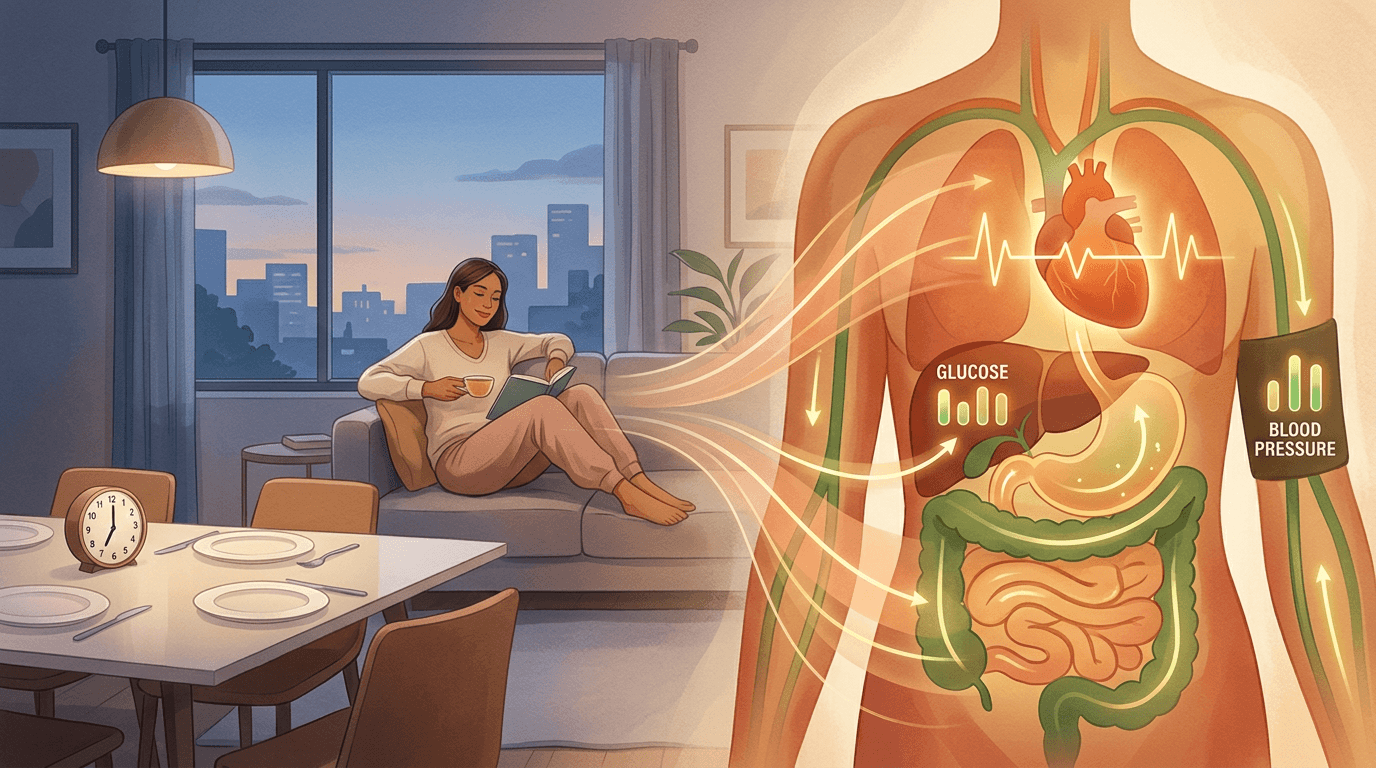
Late-night snacking can be a delightful experience, but new research indicates that eating too close to bedtime can negatively impact health. A study published in the journal **Arteriosclerosis, Thrombosis, and Vascular Biology** suggests that finishing your last meal three hours before bed can lead to decreased blood pressure, a lowered heart rate, and better-controlled blood glucose levels.
The study, conducted by researchers at Northwestern University, focused on adults aged 36 to 75 who were overweight or obese. The participants were randomly assigned to different eating schedules for at least six weeks. The control group maintained their usual nighttime eating habits, while the experimental group followed a fasting routine, eating their last meal earlier in the evening.
Both groups minimized artificial light exposure three hours before sleep, but received no other meal timing or composition instructions. Each participant's heart rate and blood pressure were closely monitored throughout the study.
## Key Findings
- **Improved Health Metrics**: Those in the fasting group exhibited better blood pressure, heart rate levels, and glucose regulation.
- **Significance of Meal Timing**: Dr. Daniela Grimaldi, a researcher involved in the study, remarked that a simple change in meal timing could yield significant improvements in autonomic balance and metabolic health, without requiring calorie restrictions or weight loss.
- **Physiological Considerations**: Dr. Kumar Sarkar noted that the two to three hours before sleep is crucial for bodily functions. Eating during this period can disrupt digestion and hinder the body’s ability to initiate sleep.
## Implications
Grimaldi emphasized that as the aging population grows, so do concerns about cardiovascular health and diabetes. The study showed a 90% adherence rate in the fasting group, suggesting that this method is sustainable for many.
For practical application, if someone typically goes to bed around 10 PM, it would be beneficial to finish dinner by 7 PM. However, the study had limitations, notably the predominance of female participants and a relatively small sample size, which could affect how results are interpreted across different demographics.
While the research focused on meal timing rather than content, Grimaldi indicated that the composition of meals also plays a role in sleep quality and health. Foods that are high in fat and glycemic content, such as donuts and white bread, should be avoided close to bedtime, as they can influence glucose stability and ultimately, sleep quality.

Ready to start your GLP-1 journey?
Gila helps you build lasting habits, understand your body, and stay on track. Join the pilot for free.
Join the Pilot