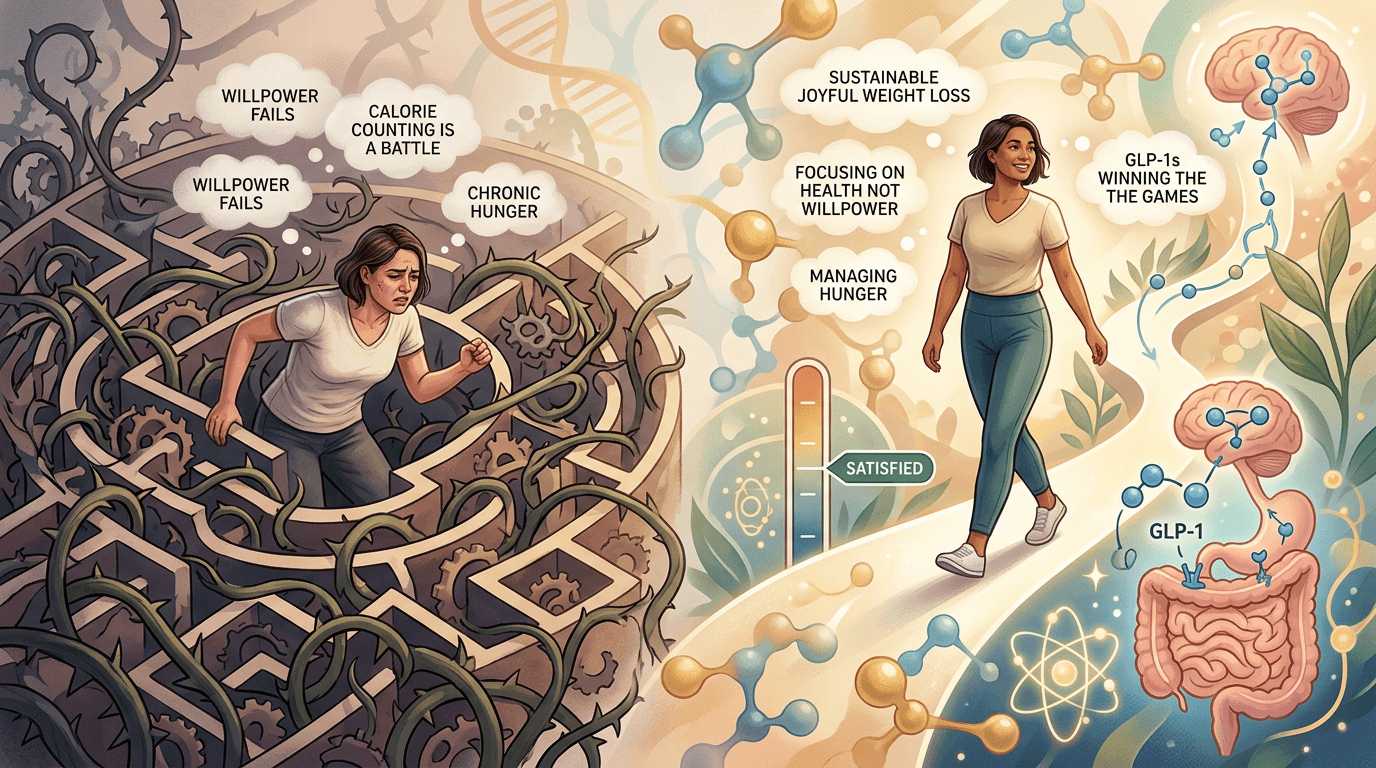
# Hunger Games: Why Diets Fail and Weight Loss Medicines Succeed
**Controlling hunger, not calories, is the holy grail of weight loss.**
Until recently, weight loss has been a struggle and eventually a failure for most people. GLP-1 medicines not only enable broad weight loss success, but they also reveal the crucial role of hunger. Whether via bariatric surgery, medicines, or lifestyle changes, hunger control is essential for long-term weight loss.
After a century of futility, the seemingly impenetrable mystery of weight loss is nearly solved. Until late 2022, many of us were taught that the weight loss journey was paved with willpower. Our Sisyphean task was to create a caloric deficit through diet and exercise and maintain it indefinitely through deliberate effort, food and activity tracking, and enduring lifestyle changes. For a minority, this formula succeeded. Yet, most people found that weight loss was a revolving door: no matter the method or the motivation, their weight eventually returned to roughly the same starting point.
Then something unexpected happened. Following decades of clinical trials yielding ineffective or dangerous weight loss medicines, a new class of injectable medicines called GLP-1 agonists arrived in 2022-2023. Not only did the average GLP-1 user experience weight loss far surpassing that typically achieved through lifestyle changes alone, but their weight loss generally came with minimal conscious effort. For the first time, people were suddenly achieving clinically significant weight loss without tracking calories, following specific diets, or enduring high-volume exercise routines. The weight loss journey for millions transformed from an uphill slog to a stroll in the park.
### Winning the Hunger Games
To understand the remarkable effectiveness of bariatric surgery and GLP-1 medicines compared to traditional diet and exercise programs, you must understand hunger. Surprisingly, the human body doesn't possess an internal calorie detector; it evolved to rely on biological proxy systems that regulate weight and appetite across times of feast and famine. These systems include:
1. **Stretch detectors in the stomach** for food volume.
2. **Appetite hormones** such as leptin, insulin, and GLP-1 that partly regulate hunger and satiety.
3. **Nutrient sensors** in the gastrointestinal tract that alert the brain to essential nutrients.
4. **Palatability detectors** in the mouth and brain to identify nutritious foods.
These mechanisms explain why many diets and exercise programs fail for long-term weight loss:
- Diets are generally low in food volume, failing to activate satiety through stretch receptors.
- Diets tend to be low in nutrients and palatability.
- Low-calorie or high-exercise diets can trigger compensatory increases in appetite and reduce metabolic activity, leading to increased hunger.
The modern era of ultra-processed food consumption has driven dramatic rises in obesity and obesity-related health conditions by bypassing these satiety mechanisms. Ultra-processed foods often contain large amounts of energy (calories) in small, low-nutrient, and highly palatable forms, creating a perfect formula for fat gain and increased cravings.
In contrast, a nutrition plan rich in fiber and protein from whole foods is the best strategy for healthy weight management. Ideally, this plan could be paired with moderate exercise to mitigate compensatory metabolic responses.
Through the same mechanisms that diets fail, bariatric surgery and GLP-1 medicines succeed:
1. **Bariatric surgery** directly modifies the stomach and, in some instances, the intestinal tract to reduce hunger through enhanced stretch detection and appetite hormone function.
2. **GLP-1 medicines** selectively enhance specific appetite hormones and modify food reward mechanisms, resulting in reduced both physical and psychological hunger.
### Takeaway
Regardless of your approach to healthy weight loss, hunger will likely be your most formidable opponent. Effective dietary, physical activity, surgical, and medicinal strategies all capitalize on human hunger and satiety mechanisms. Conversely, weight loss methods that fail to adequately control hunger rarely produce lasting results. The insights provided by new GLP-1 medicines can enhance the outcomes for all pursuing long-term healthy weight management.
### References
1. Wing RR, Phelan S. Long-term weight loss maintenance. Am J Clin Nutr. 2005 Jul;82(1 Suppl):222S–225S.
2. Hall KD, Kahan S. Maintenance of Lost Weight and Long-Term Management of Obesity. Med Clin North Am. 2018 Jan;102(1):183–197.
3. Li MF, Cheung BM. Rise and fall of anti-obesity drugs. World J Diabetes. 2011 Feb 15;2(2):19–23.
4. Jastreboff AM, et al. Tirzepatide Once Weekly for the Treatment of Obesity. N Engl J Med. 2022 Jul 21;387(3):205–216.
5. Astrup, A. Reflections on GLP-1 as a satiety hormone: Implications for obesity therapy.
6. Lewis, S. A good stretch regulates satiety. Nat Rev Neurosci 21, 1 (2020).
7. Kelesidis T, et al. Narrative review: the role of leptin in human physiology. Ann Intern Med. 2010 Jan 19;152(2):93–100.
8. Williams EK, et al. Sensory Neurons that Detect Stretch and Nutrients in the Digestive System. Cell. 2016 Jun 30;166(1):209–21.
9. de Macedo IC, et al. The Influence of Palatable Diets in Reward System Activation: A Mini Review. Adv Pharmacol Sci. 2016.
10. Redman LM, et al. Metabolic and behavioral compensations in response to caloric restriction. PLoS One. 2009;4(2):e4377.
11. Paddon-Jones D, et al. Protein, weight management, and satiety. Am J Clin Nutr. 2008 May;87(5):1558S–1561S.
Ready to start your GLP-1 journey?
Gila helps you build lasting habits, understand your body, and stay on track. Join the pilot for free.
Join the Pilot